
Protecting a property on a budget is entirely doable, as long as you weigh up-front cost against what a fence actually costs you over its life. The cheapest fence to install is not always the cheapest fence to own. Here is a straight comparison of the affordable end of the security range, and the trade-offs that matter.
Chain link: the affordable classic
Chainwire (chain link) is one of the most economical security fences going. Made from galvanised steel, it gives you a genuine barrier at a low price per metre, installs quickly, and asks almost nothing in maintenance once it is up. It comes in a range of heights, can be PVC-coated for looks and extra life, and privacy slats can be added later if you need them. For marking and securing a boundary at the lowest sensible cost, it is hard to beat. About all it asks is a check on tension now and then and clearing leaf litter from the base.
Welded wire: strength for a bit more
Welded mesh is a step up from chainwire in rigidity and cut-resistance, because the wires are welded at every join into a stiff panel rather than woven. It costs a little more but resists cutting and climbing better, comes in a range of heights and mesh sizes, and lasts for years with minimal upkeep. It is the value pick when a woven fence is not quite enough but a full high-security system is more than you need.
Palisade: secure and sharp-looking
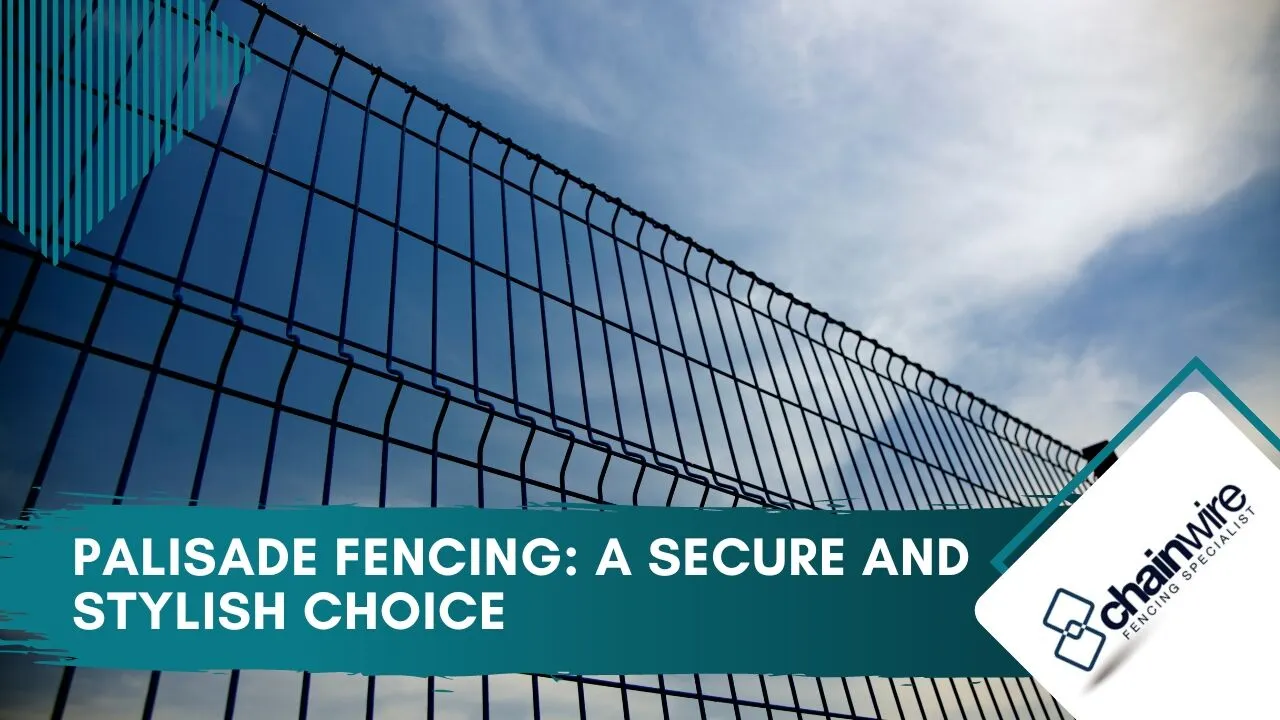
For a balance of security and street appeal, steel palisade fencing is a strong option. Vertical steel pales on horizontal rails make a genuinely hard-to-beat barrier, and the pointed tops are a real deterrent. It costs more than chainwire or welded wire, but the look and the security can be worth it on a commercial frontage.
The materials people reach for to save, and the catch
You will see plenty of other materials pitched as budget fencing: vinyl and composite for low maintenance, timber and bamboo for a cheap screen, even electric fencing as an add-on deterrent. They exist and they have their place, but weigh them honestly. Timber needs sealing and eventually rots at the posts; bamboo is a light screen, not a security barrier; electric fencing is an add-on to a physical fence, not a replacement for one. The lowest sticker price often comes with the highest lifetime cost once you count repairs and replacement. As a metal-fencing specialist, our budget recommendation for actual security lands on chainwire, welded wire or palisade, because they combine low cost with a fence that genuinely resists a break-in.
Where DIY saves, and where it costs
Simpler fences like chainwire are within reach of a capable DIYer, and doing the labour yourself is a real saving. But a fence installed with the wrong tension or shallow footings fails early, and fixing it costs more than the labour you saved. If you are not confident on the footings and the line, get the install done and put your budget into the material instead.
The takeaway: the cheapest secure fence over its whole life is usually galvanised chainwire, stepping up to welded wire or palisade where you need more. Judge on lifetime cost, not sticker price, and be wary of a material that is cheap to buy and expensive to keep. For how these fences fit into a wider security plan, see how to make your fence burglar-resistant.