
Chainwire is one of the most practical materials you can put around a property. It is versatile, hard-wearing and, unlike solid barriers, keeps a clear line of sight through the fence. Before you settle on a mesh, though, it pays to understand the one detail most people overlook: the diamond size.
The diamond size, sometimes called the mesh size, is the clear distance between the parallel wires that form one side of the diamond. It sounds like a small thing. It changes almost everything about how the fence performs.
The three families of wire mesh
Not all mesh is the same. Three broad types turn up in fencing work.
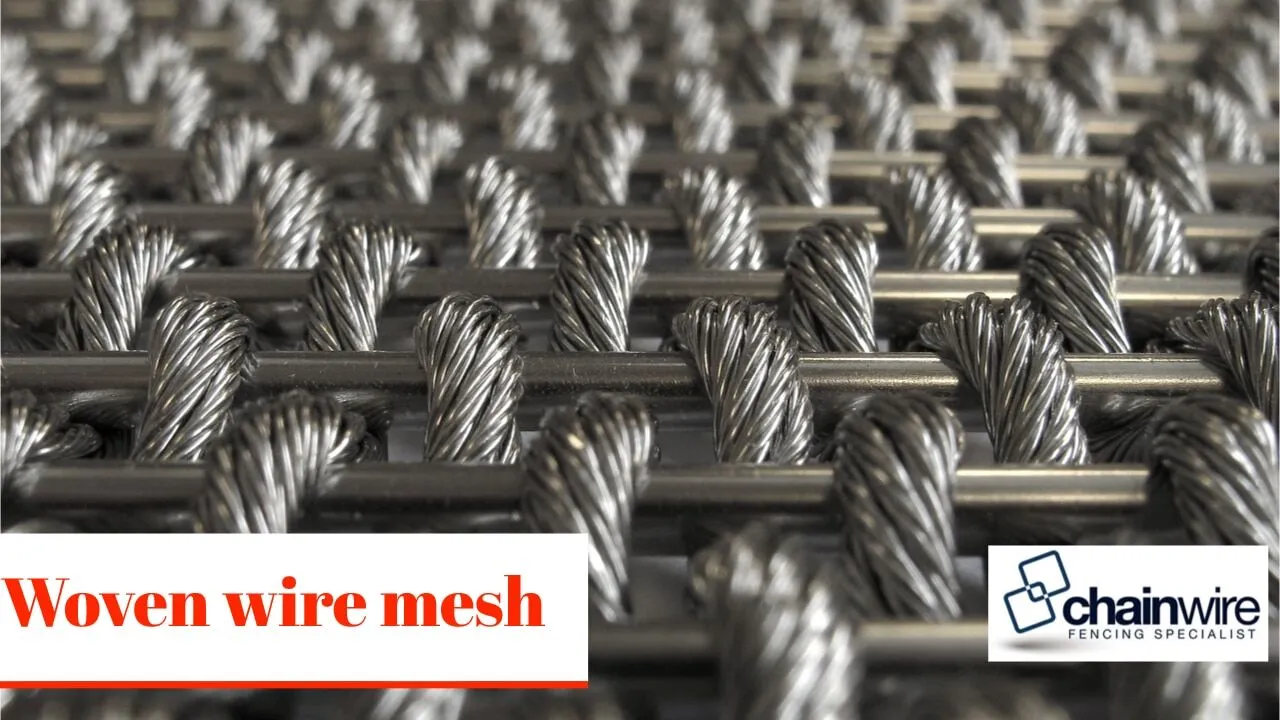
- Woven wire mesh has small openings and is often called wire cloth. It is common on doors, windows and screened enclosures where the job is to keep insects or small debris out.
- Welded wire mesh has each wire welded at every crossing point. It is the heavy-duty option, favoured for commercial and industrial security where the barrier has to resist force.
- Chainwire (chain link) is the woven diamond mesh most people picture when they think of a fence: galvanised wire woven into an open diamond pattern, strong, affordable and quick to install.
Smaller diamond, more steel, more security
Here is the rule worth remembering: the smaller the diamond, the more steel goes into the same area of fence, and the harder it is to climb or cut.
Wire gauge works alongside diamond size. A common 50 mm (roughly 2 inch) mesh is usually made from 9 or 11 gauge wire. Open it up to a larger diamond and you can drop to a lighter gauge. Tighten the diamond right down and you need heavier wire again, which is why high-security mesh feels so much more solid in the hand.
The common sizes map neatly to their jobs:
| Diamond size | Typical use |
|---|---|
| Around 45 mm (1 3/4 inch) | Tennis courts and sporting enclosures |
| Around 30 mm (1 1/4 inch) | Pool and general commercial fencing |
| 16 mm and under (5/8, 1/2, 3/8 inch) | High-security "mini mesh", hard to climb or cut |
A residential boundary fence can run a larger diamond because visibility and cost matter more than resisting a determined intruder. A data centre, a substation or a correctional perimeter wants the tightest mesh it can get, because a small diamond gives fingers and wire cutters nowhere to work.
Match the mesh to the job
The right diamond size is the one that suits the purpose. Enclosing small animals calls for a tight mesh so nothing squeezes through. A large perimeter that relies on a clear sightline for surveillance can run a more open diamond and save on steel. Fencing that has to hold a tennis ball inside a court needs a diamond small enough that the ball cannot pass, which is why court mesh sits around 45 mm.
If you are weighing up a higher-security barrier, our guide to what you need to know about weldmesh fencing covers the welded-panel alternative, and for the tightest anti-climb specs a fencing contractor can quote you the right weldmesh or mesh option for the site.
The takeaway is simple. Decide what the fence has to do first, then let that set the diamond size and gauge. Getting that pairing right is the difference between a fence that quietly does its job for decades and one that never quite suited the property.