
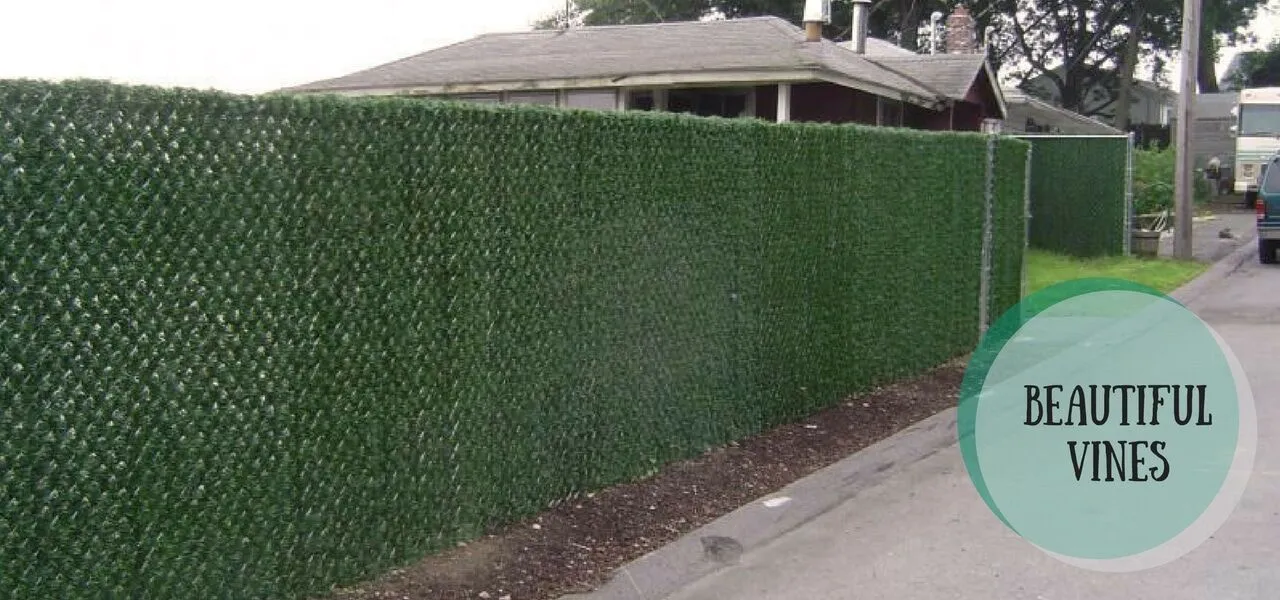
Chainwire is versatile, cheap and easy to install, whether it is bounding a property, dividing a playground, forming a compliant pool barrier or keeping pets in the yard. Its one weakness is looks, and sometimes it clashes with the feel of a garden. The good news is you can turn a plain chainwire fence into a feature without spending much. Here are four ways to do it, and how to get each right.
Paint it
Painting is the quick, cheap option, and the colour changes the whole effect. Dark shades like black, brown and deep green make a fence recede into the garden, while bright blues, greens, reds, yellows and oranges make it a feature.
Prep first: the fence must be clean and rust-free. If there is rust, remove it and apply a rust-inhibiting metal primer before you paint. Clear the area, mow and cut back any plants in the way, and lay a tarp underneath to catch drips. Use a high-quality exterior enamel, rolled on, with a brush for the tight spots. Spray painting gives a lovely finish but the overspray is harder to control, so a roller is the safer bet for most people.
Cover it with rolled wood screening
For full privacy with a natural feel, rolled wood screening is ideal. It comes in stick, reed, cane, bamboo, fern, twig and dwarf pine, held together with galvanised wire, in sizes to suit any fence height. It attaches easily to an existing chainwire fence and instantly softens the look while blocking the view.
Add fence slats
Fence slats thread through the mesh to add privacy and colour, and they slot in diagonally, vertically or horizontally to change the look completely. They come in aluminium, polyethylene or wood in a range of colours. Before you buy, check the details that decide the fit: your fence height, the mesh size and the wire gauge. Slats also come in top, bottom and self-locking types, which differ in how much privacy and wind load they give, so work out what you need before shopping.
Grow vines over it
Nothing softens a fence like plants. Annual and perennial climbing vines turn chainwire into living greenery.
- Annual vines will not cover the fence year-round, so they suit a fence you plan to replace or a gap you are filling while other plants grow. Options include Black-Eyed Susan, Cardinal Climber, Cup-and-Saucer vine, Cypress vine, Hyacinth Bean and Morning Glory.
- Perennial vines flourish year-round but take longer to fill in. Good choices are Boston or English Ivy, Clematis, Dutchman's Pipe, Five Leaf Akebia, Passionflower, Trumpet Creeper and Virginia Creeper.
One caution: heavy woody vines like wisteria, climbing hydrangea and trumpet creeper can pull chainwire apart if planted too close. Grow those on a sturdy timber or metal lattice set in front of the fence, and stick to a single variety.
The takeaway
A chainwire fence gives you security and visibility for very little money, and a coat of paint, a roll of screening, a set of slats or a curtain of vines turns the eyesore into something you are happy to look at. Pick the one that matches how much privacy you want, and prep properly before you start.