
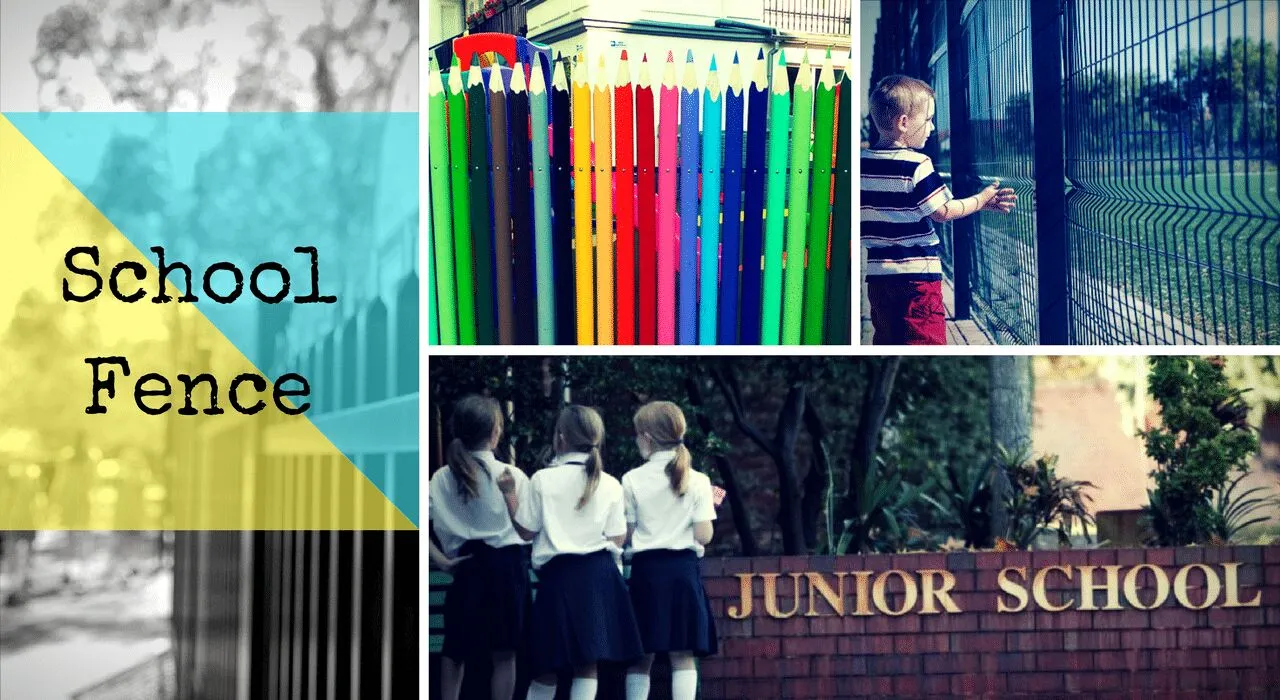
A school is one of the most important places in a community, and keeping the students, teachers and staff inside it safe is the whole point of a security fence. Even a modern school with alarms, cameras and patrols still needs a good perimeter, because those systems watch and record while the fence is the thing that actually keeps people out. Here is what school fencing does, why it works, and how to design one that earns its keep.
What a school fence actually does
A perimeter fence does several jobs at once:
- Keeps intruders out. Schools are busy, open places, but a fence makes it far harder for someone with no business there to wander in, which is the first line of defence against everything from theft to far more serious threats.
- Controls the coming and going. A fenced school usually has only one or two monitored entry points, so staff can screen visitors and track who enters and leaves, instead of policing an open boundary on every side.
- Keeps students on-site. Older students who fancy skipping class find it much harder to slip away over a proper fence, and younger children are kept back from a busy road.
- Deters vandals. Open grounds invite graffiti and damage from people looking for an easy target and a quick exit. A fence they have to climb removes both.
- Gives everyone peace of mind. Parents relax knowing the grounds are secured, and students and staff who feel safe focus better on teaching and learning.
- Marks the boundary. A clear perimeter tells the public where the school begins and, quietly, that its grounds are not a shortcut or a hangout.
The design principle behind it: CPTED
Good school fencing is not just a tall barrier. It follows a well-established security design framework called Crime Prevention Through Environmental Design, or CPTED, which shapes an environment to discourage crime. Two CPTED ideas matter most for a school fence:
- Territoriality. A clear perimeter marks ownership of the grounds, and people treat land that plainly belongs to an institution with more respect. A fence draws that line.
- Natural surveillance. The fence must be positioned so it does not create blind spots or block sightlines. Staff should be able to see the grounds and the entry points clearly, which is exactly why open-weave chainwire or steel palisade beats a solid wall for a school: it secures the boundary without hiding anyone behind it.
Reviews of school fencing consistently report large drops in trespassing, vandalism and break-ins at schools with well-designed, well-maintained perimeters, which is why thousands of Australian schools have worked with their state governments to install them.
What makes a good school fence
A fence only delivers if it is designed and built well. The characteristics to insist on:
- Hard to cut, climb or damage. Durable steel and galvanised materials that resist graffiti and cannot be easily breached.
- No footholds. No horizontal rails or features a child can climb, and nothing left nearby (bins, seating, planters) that gives a leg-up.
- Clear sightlines, no dead spots. A layout that keeps surveillance lines open and gives nowhere to hide.
- Proper, monitored entrances. A small number of controlled entry and exit points rather than many casual gaps.
- Secure out of hours. It has to protect an empty school in the holidays as well as a full one on a Monday.
- Fits its surroundings. A tidy, appropriate fence adds to a school's appearance, lifts pride and morale, and even helps with the impression made on prospective families.
Why cheap fencing costs more
Security fencing costs more upfront than ordinary fencing, and that is the point: it is built from steel and galvanised to last for years with little maintenance, so it works out cheaper over its life. A low-priced fence that rusts, sags or is easily cut cancels out the security benefit and needs constant repair before an early replacement. Treat a school fence as an investment, spec it properly, and have it installed by professionals, because a poorly chosen or poorly built fence can undo the very safety it was meant to provide.
The bottom line
A school fence is a simple thing that does a lot: it keeps the wrong people out, keeps students where they should be, deters vandals, and gives parents, staff and students the confidence to get on with the day. Design it around clear sightlines and controlled access, build it from durable materials, and maintain it. For schools in the Hunter after chainwire or steel security fencing done to spec, the Newcastle crew at Chainwire Fencing Specialist handle exactly this kind of work.