
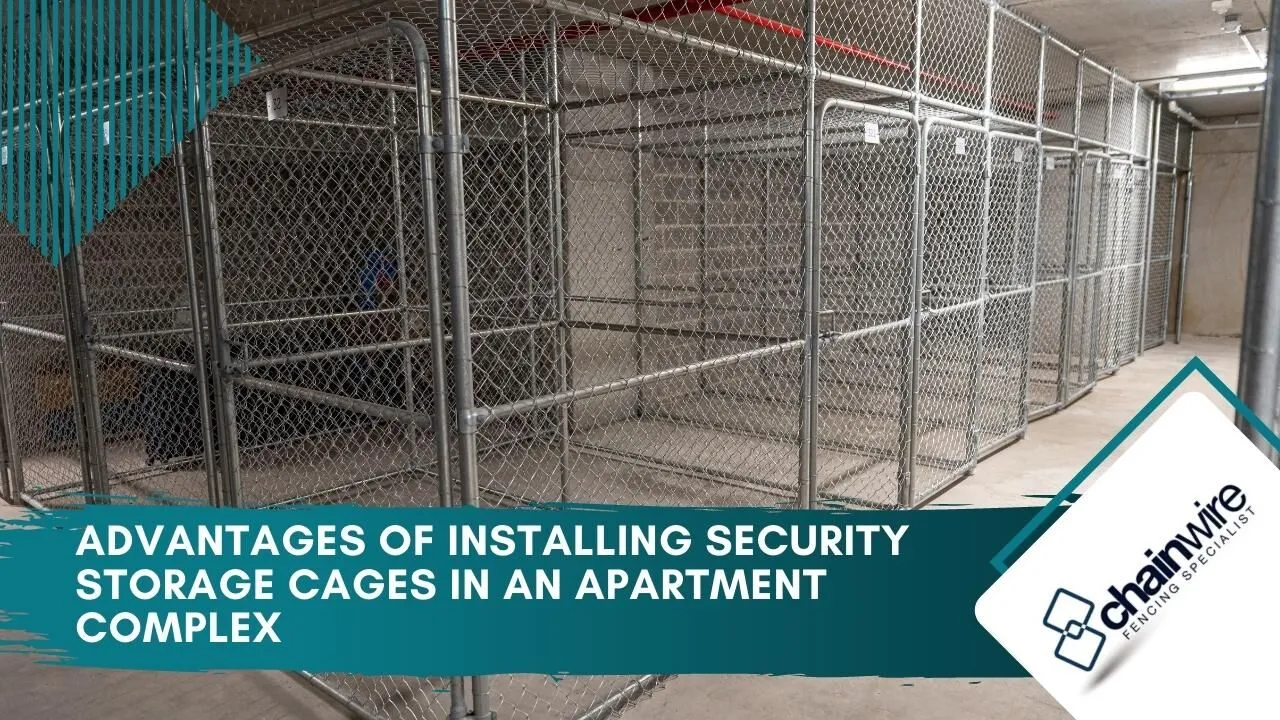
Chainwire is not just a perimeter fence. Indoors, the same mesh builds storage cages and internal partitions that divide and secure a space far more cheaply than building walls. It shows up in apartment basements, warehouses, factories and server rooms. Here is how both uses work, the benefits and drawbacks, and what separates a solid installation from a flimsy one.
Security storage cages in apartment complexes
In an apartment building, storage cages usually sit in one of three places: common areas for shared temporary storage, weatherproof exterior cages where indoor space is tight, or, most commonly, a dedicated storage floor holding a cage per unit.
Why they are worth it
- Extra space for tenants. Anything that will not fit in the apartment goes in the cage, which keeps units clutter-free and stops residents dumping belongings in common areas.
- A feature that helps let apartments. Between two similar apartments at the same price, the one with secure storage has the edge. It is a genuine drawcard.
- They save tenants money. On-site storage removes the need to rent a costly external self-storage unit, and it is far more convenient.
- A revenue option for landlords. Where cages are not part of the lease, they can be offered as a paid extra, as long as the deal is fair to tenants.
- Space for building equipment too. Admin can use dedicated cages for cleaning, gardening and landscaping gear.
- Added property value. Extra storage is a real amenity that lifts the value of the building.
What makes a good cage
- Enough cages, sized sensibly. Plan for the building's occupancy, ideally at least one cage per unit, and consider varying sizes by apartment size or rent.
- Strong enough to resist force. Theft and vandalism happen, and cheap cages fail where the bars around the lock snap off. The material, the weak points, the hinges and the locking mechanism all matter, so a reinforced build is worth it even when the contents are not valuables.
- Extra care for outdoor cages. Exposed cages face both weather and thieves, so factor in corrosion resistance, a visible well-lit location, and protection for the contents.
- Privacy where wanted. Hooks or bars inside let tenants hang curtains or covers, which many appreciate.
Internal partitions in warehouses and factories
The same chainwire divides open commercial and industrial space into working zones without permanent walls. Common uses include inventory management, holding areas, animal stalls, crowd control, equipment isolation and hazard separation.
The pros
- Organisation and productivity. Partitions classify and subdivide stock so items are quick to find, and in server rooms they group racks for tidy tagging and cabling.
- Modularity. Built by an expert, partitions add or remove panels as needs change. Drop a panel to merge two enclosures for an oversized shipment, or add panels to split a large room. That flexibility is only there if it was designed in.
- Safer separation. Around high-voltage generators, batteries and transformers, a partition keeps unauthorised people away from dangerous equipment, and in industrial farms it isolates sick animals to protect the rest.
- Fast and cheap. If the job is simply to separate areas, chainwire is the low-cost solution, quick to install, turning an open space into a working facility in days.
The cons
- It uses floor space. Even slim chainwire takes a few inches, and a poorly planned partition can waste more, so tell your fencer exactly what you want to achieve so they can maximise the layout.
- It does not add resale value. Chainwire is inexpensive and permanent partitions can even make a space harder to sell, since a buyer with different plans may prefer a clear, open floor.
The common thread
Whether it is a cage in a basement or a partition on a factory floor, the value of chainwire indoors is the same: it divides and secures a space cheaply, quickly and with full visibility of the contents. The difference between a cage that holds and one that fails is the build, so this is work for someone who knows how to work with metal, not a rushed job with flimsy hardware.