
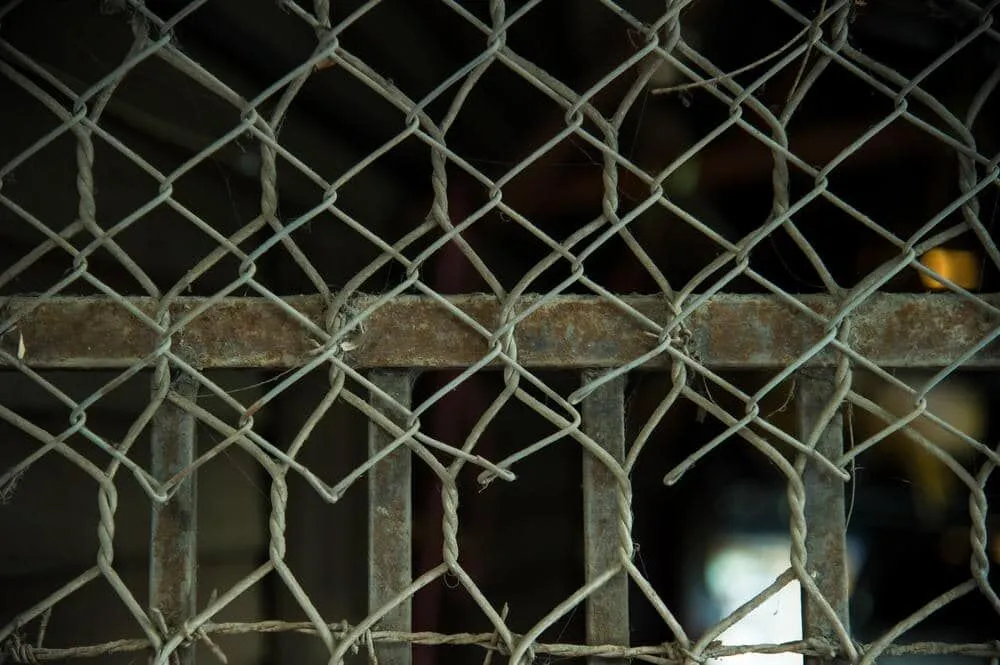
Ever looked at a chainwire fence and wondered what all the bits are called? It is a straightforward structure once you know the pieces, and understanding them helps whether you are planning a fence, describing a repair or just curious. Here is a quick run-through of the components you will find in a standard chainwire fence.
Top rail
The top rail is the horizontal member running along the top of the fence, the part you would naturally lean on as you walk up to it. Think of it as a crossbeam tying the line posts together. It is held in place by a series of loops, and where the fence turns a corner or a bend, the rails are joined with elbows. The top rail is a big part of what keeps the fence straight and rigid.
Line posts
The line posts are the vertical poles the chainwire mesh is fastened to. They give the fence its shape and strength and hold it upright. Getting the spacing right matters: too far apart and the fence goes floppy and sags between posts; too close and you are wasting posts and money. The right spacing depends on the mesh and the job, which is where experience earns its keep. Alongside the line posts, the heavier posts at corners, ends and gates, the terminal or anchor posts, carry the tension of the whole fence and are set larger and deeper.
Tie wire
Tie wire connects the chainwire mesh to the top rail and posts. Enough material is left near the top of the fence to wrap securely around the rail for a snug fit, then it is tied off to form a grip meant to last the life of the fence. It is done with a proper tensioning tool, doing it with pliers gives a loose, untidy tie that will not hold, so this is one of the details that separates a fence that stays taut from one that goes slack early.
Loop caps
The loop cap sits on top of each line post, and the top rail passes through it. It acts as a guide, keeping the rail aligned and the fence running straight along its length. Small part, real job.
How it all works together
Put simply: the posts stand the fence up and anchor its tension, the top rail and loop caps keep it straight, the mesh forms the barrier, and the tie wire binds the mesh to the frame under tension. Get the post spacing, the tensioning and the bracing right and you have a fence that stays tight and upright for decades. Get them wrong and it sags, and every one of the common installation problems traces back to one of these components.
If you are weighing up doing your own fence, our comparison of DIY versus professional installation covers where these details most often go wrong. And when you are ready to look after an existing fence, the fence care and maintenance guide shows how to keep every one of these parts in good order.