
Whether to set fence posts in concrete or straight into the ground is one of the questions we get asked most, and the answer is not always concrete. It depends on the post, the soil and how long the fence needs to stand. Here is how we think about it, plus what to do when the ground is not soil at all.
For a permanent steel post, concrete wins
For any permanent fence, we set the posts in concrete. A post that is not concreted will, given time, sag and fail structurally. Done properly it is more than digging a hole and tipping some concrete in: the footing size, depth and mix all matter, and a good footing is what keeps the line true for decades. On a permanent chainwire or steel fence, concrete footings are the default.
When concrete is the wrong call
There are two clear cases where you do not want concrete around a post.
Wooden posts. Concrete around a timber post speeds up rot. It acts like a cup, trapping moisture and rain against the timber instead of letting it drain away as it would in open ground, and it makes the post very hard to pull and replace later. The better method for a timber post is to set it in gravel, which drains and still holds the post firm.
Temporary fencing. If the fence is only going up for a short while, say for an event, concrete is more effort to remove than it is worth. A temporary fence wants a footing you can lift out again.
Setting posts in soil: concrete or gravel
On soil, the choice between concrete and gravel comes down to the ground itself. Loose, sandy soil does not grip a post, so it wants concrete to hold. Heavier soils hold well on their own, so gravel is often enough and drains better. Knowing your soil type is half the job, and if you are not sure, that is worth asking a fencer before you dig every hole.
What about hard surfaces, brick, pavers and concrete?
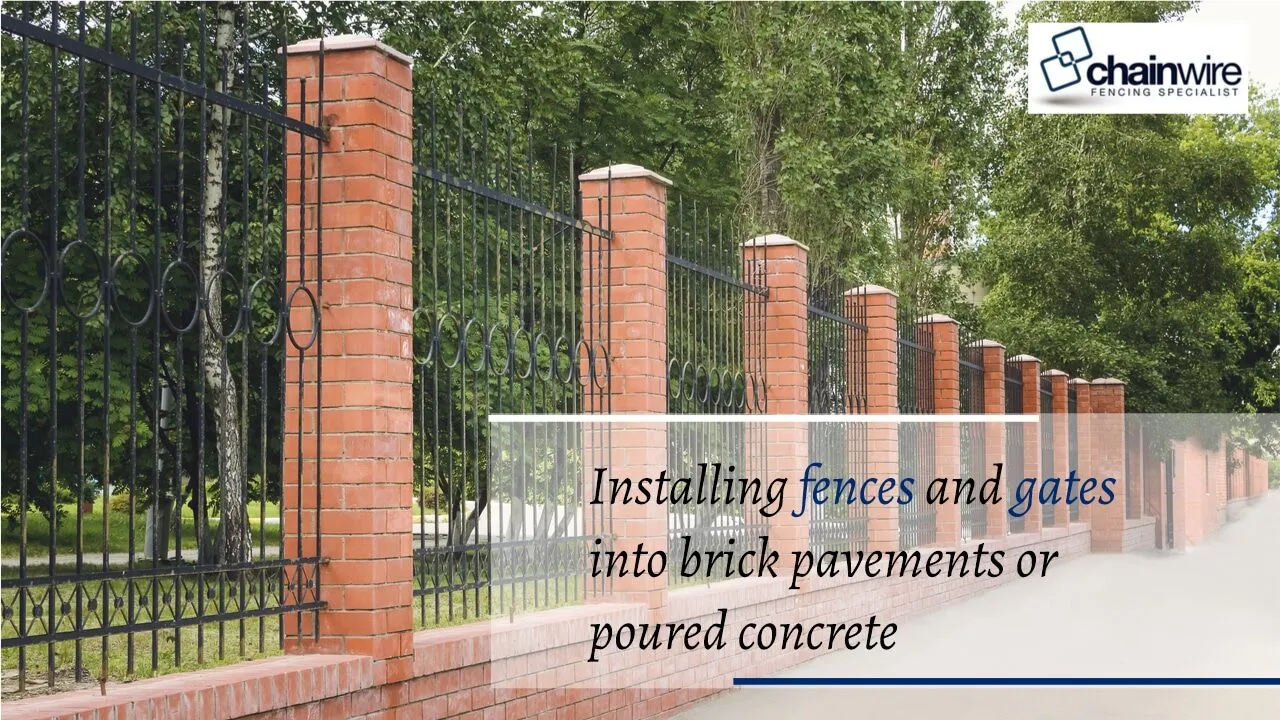
You can fence almost any surface, it just changes the fixing. On brick pavement or poured concrete there are two proven methods:
- Core drilling. Bore a clean hole through the slab or pavement with a diamond-tip core bit and set the post into it. It gives a strong, tidy result in any concrete.
- Base plate and bolts. Where core drilling is not possible, bolt the post to a base plate on the surface. This is how you fix onto a timber deck, onto tiles, or where there are underground services you cannot drill through. The one rule: the surface has to be strong enough to carry the fence or gate.
Fencing on a slope
A slope needs planning and a bit of craft. To follow the contour you can set individual pickets, use stepped panels, or run preassembled panels down the grade. On a steep slope, cutting into the bank is better than leaving big gaps under the panels. Most fences are not built to run underground, so a gravel board between the posts closes the gap along the bottom neatly.
The one thing that matters most
Whatever the surface, the strength of the posts is the whole game. A fence is only as good as how its posts are set, so match the method to the post, the soil and the surface, get the footings right, and the fence will stand. Get the posts wrong and no amount of good wire will save it.