
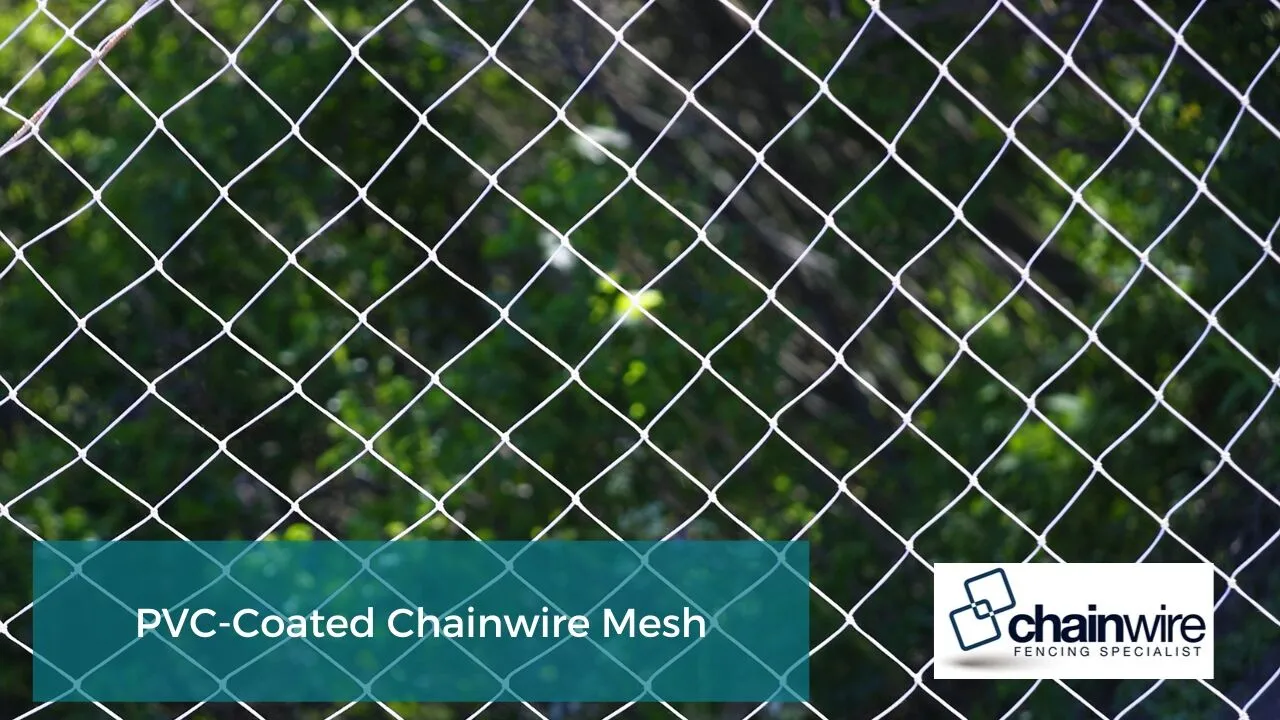
Chainwire mesh, also known as chain-link or cyclone fencing, is one fabric with several personalities. The weave is always the same familiar diamond, but the metal and the coating change what the fence is good at and what it costs. Choosing the right one is mostly about being honest about where the fence lives and what it has to keep in or out.
Galvanised chainwire mesh
This is the default, and for most jobs it is the right default. The steel wire is coated in zinc, which protects it from rust and gives it a long outdoor life for a modest price. It goes on residential boundaries, sports fields and industrial sites without complaint, and the gauge and grid size can be dialled up or down to suit how much security you need. If you are not sure what you want, galvanised is where the conversation starts.
PVC-coated chainwire mesh
Take galvanised mesh, add a bonded layer of PVC over the top, and you get a fence that looks better and lasts a little longer. The plastic coat adds a second barrier against the weather and lets you choose a colour, with black being the most popular because it visually recedes and lets the view through. It is a common pick for homes, parks and recreation areas where the fence should blend in rather than announce itself.
Stainless steel chainwire mesh
When corrosion is the real enemy, stainless earns its higher price. Unlike galvanised or PVC-coated mesh, stainless resists rust from the inside out, which makes it the choice for coastal blocks, chemical exposure and other harsh environments, as well as high-security sites like airports and correctional facilities where a fence has to last and stay tidy for decades. You pay more up front and get it back in low maintenance and long life.
Security chainwire mesh
Security mesh is built to slow an intruder down. It uses thicker wire and a tighter grid so it is hard to cut and offers no fingerholds to climb, and it is often finished with a barbed selvedge or topped with barbed or razor wire. It suits sites where a breach is genuinely costly: government buildings, data centres, substations and high-value commercial yards.
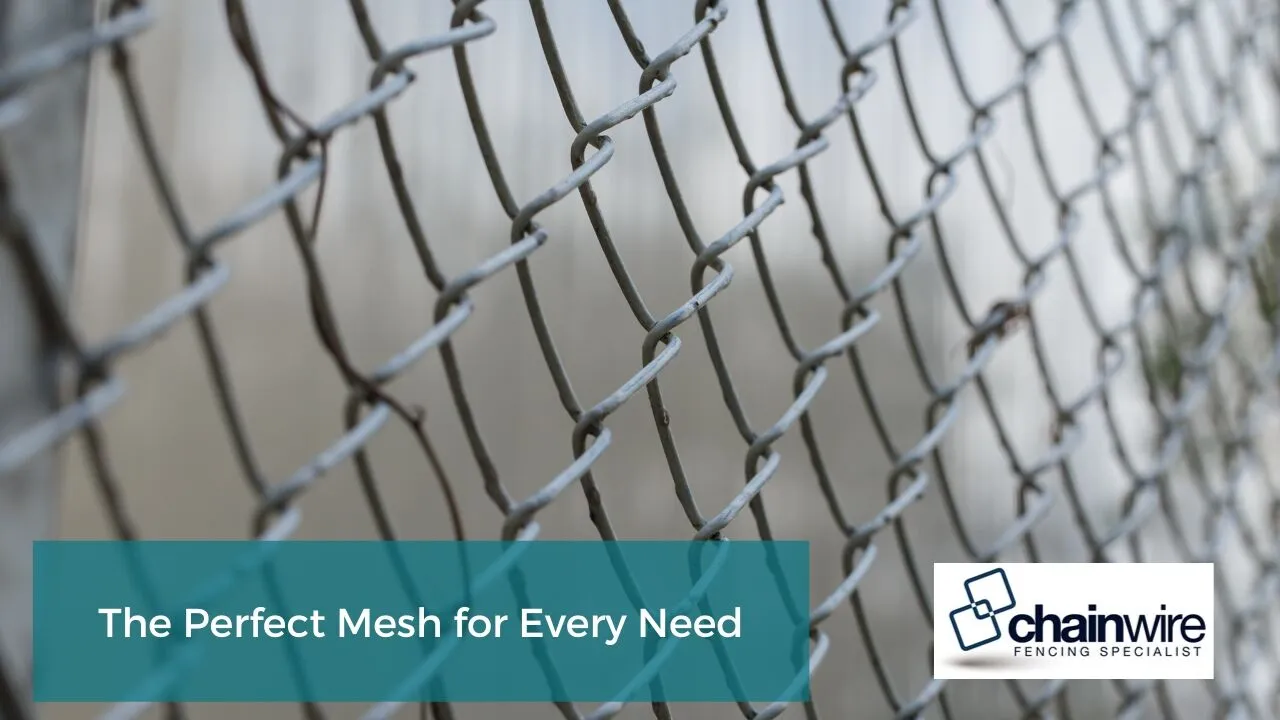
Matching the mesh to the site
The right mesh comes down to three questions: where is it (coastal and industrial sites push you toward stainless or heavier coatings), how hard does it have to be to beat (which sets the gauge and grid), and how should it look (which is where PVC colour earns its place). Get those three right and the fence quietly does its job for years. For a fuller breakdown of gauge, grid size and selvedge, see Characteristics of a Chainwire Fence.
The takeaway: there is no single best chainwire mesh, only the right one for your site. Start with galvanised, step up to PVC-coated for looks, stainless for corrosion, and security mesh where a cut or a climb would actually cost you something.