
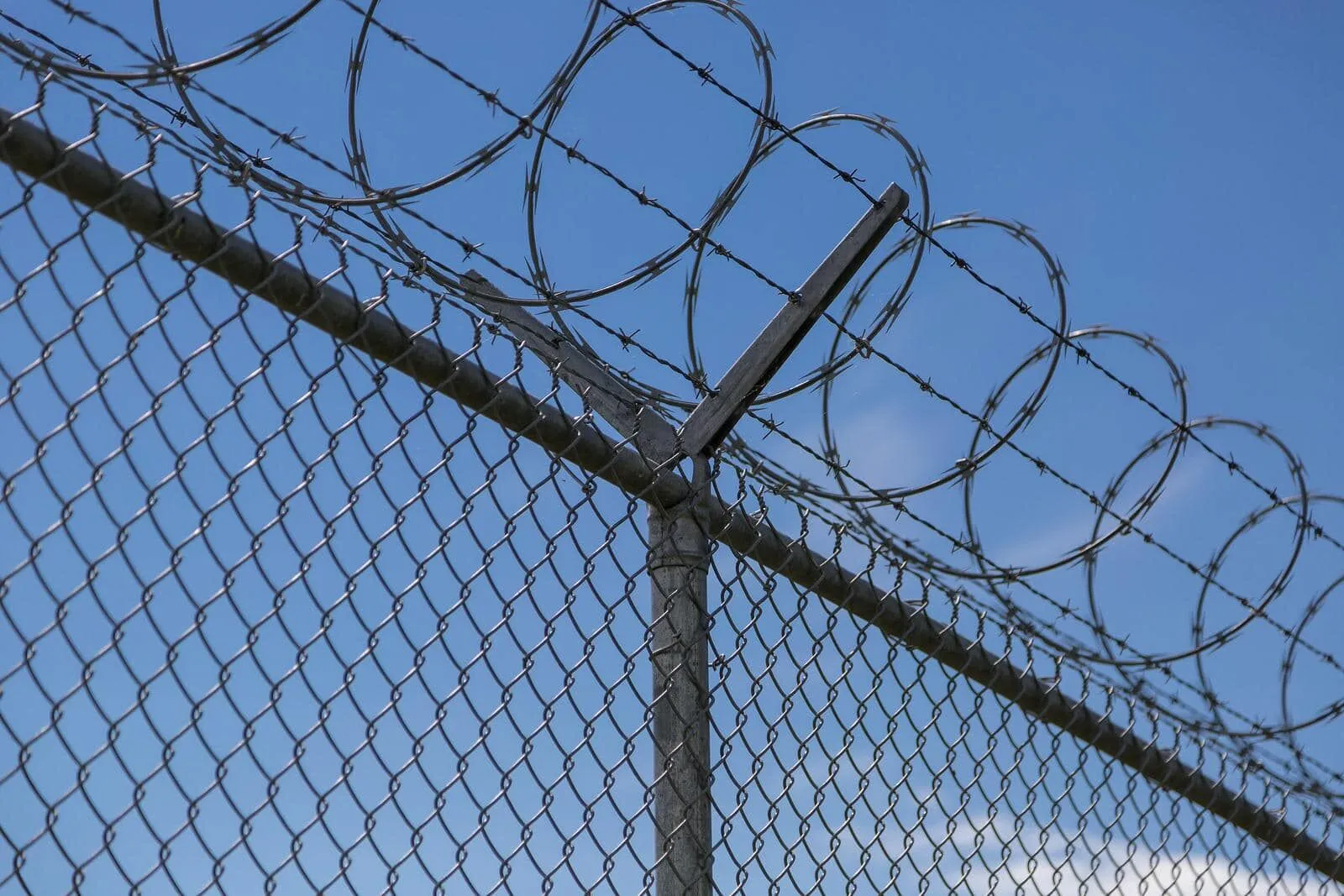
Correctional and detention fencing is built to contain, not just to mark a line. Where a normal boundary fence keeps honest people honest, a correctional perimeter has to resist someone with time, motivation and no interest in the rules. That changes the mesh, the footings, the toppings and the whole way the job is specified and bought.
What makes it different to a regular fence
A standard chainwire fence is easy to cut, climb or lift at the base. High-security fencing closes those routes off:
- 358 mesh (the aperture is roughly 76 by 12.7mm) is too tight to get fingers or a toe into, so it cannot be climbed like a diamond mesh and is very slow to cut.
- Anti-dig footings carry the fence below ground so it cannot be lifted or tunnelled under.
- Anti-climb toppings, barbed or razor detail, add height and deterrence at the top.
- Alarmed and access-controlled gates tie into the facility's monitoring, CCTV and detection systems rather than standing alone.
The standards and who sets them
High-security fencing is specified against government security standards and the operating requirements of the facility itself, with Corrective Services NSW and workplace safety rules under SafeWork NSW in the frame. Materials, heights and detection compatibility are usually set by the client or a security consultant, not chosen off a shelf.
It is procurement-grade work
An honest word on this: correctional fencing is not a job you quote off a photo. These builds run to a written specification, approved materials and a tender or procurement process, and the fence is one part of a security system that includes detection, surveillance and access control. The value is high and the volumes are low. The right approach is a conversation about the spec, not a catalogue.
Who builds it
High-security and weldmesh fencing is fabricated and installed by the Newcastle crew behind Chainwire Fencing Specialist, who have worked on secure and industrial sites since 2004. To discuss a specification or a 358 mesh perimeter, contact the team.
If you are scoping a secure perimeter, get the mesh spec and the anti-dig detail agreed early. Those two decisions drive the cost and the lead time more than the fence length does.