
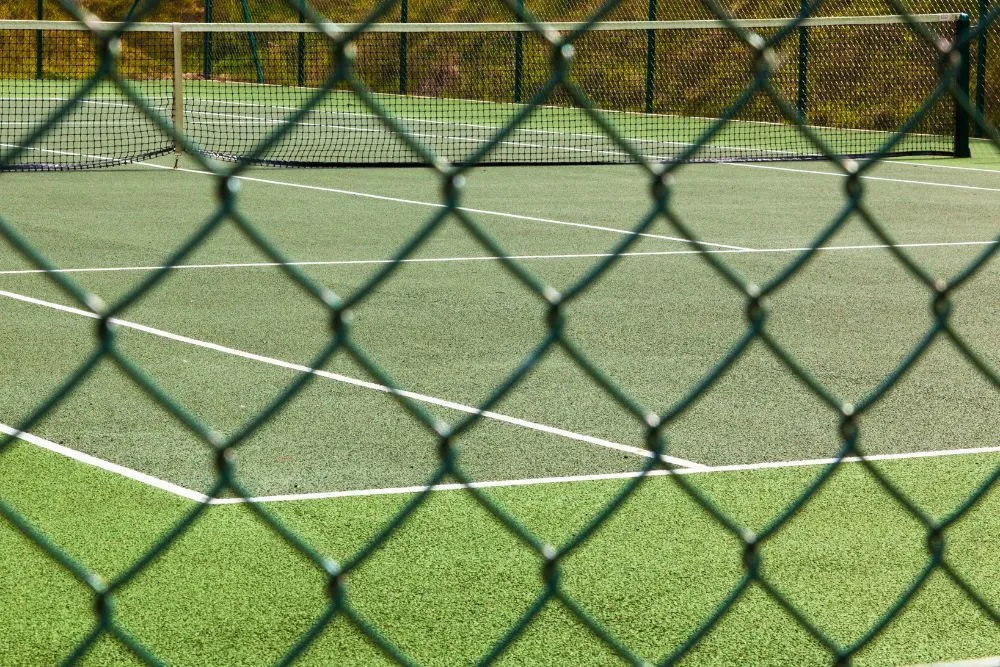
Court fencing has one job that a normal fence does not: it has to contain fast-moving equipment while taking constant contact. A tennis, basketball or multi-use court fence keeps balls inside the play area, manages who can get on the court, and stands up to being climbed, leaned on and hit day after day.
What goes into a court enclosure
- Chainwire mesh in the aperture that suits the sport. Tighter diamonds hold smaller, faster balls; wider diamonds suit general enclosures.
- PVC coating in black or green for wear resistance and a cleaner look than bare galvanised.
- Height chosen to the ball, higher behind the baseline or goal where the ball is coming at pace, lower along the sides.
- Gates, from simple access to controlled or alarmed entry where the court is shared or booked.
Sizing it to the sport
The right diamond size and height come from what is played on the court, not from a default. A tennis court wants a taller mesh at the ends to stop long balls, a netball or basketball enclosure focuses containment behind the ring, and a multi-use court is a compromise sized to the fastest game it hosts. Getting this wrong shows up fast, either as balls escaping or as an over-built, over-priced fence.
Standards and approvals
Court and enclosure fencing is built to the NSW Office of Sport guidance for public sports areas, local council rules on enclosure height and design, and SafeWork NSW requirements for safe installation. For a public or club facility, confirm the council conditions before the posts go in.
Who builds it
Court and sports enclosure fencing is built by the Newcastle crew behind Chainwire Fencing Specialist, who have fenced club, school and public courts across the region since 2004, and who come back for maintenance and repairs after the last post is set. To scope a court, contact the team.
Decide the mesh size and end heights around the sport that will actually be played most. That single call is what makes a court fence feel right rather than either leaky or overbuilt.