
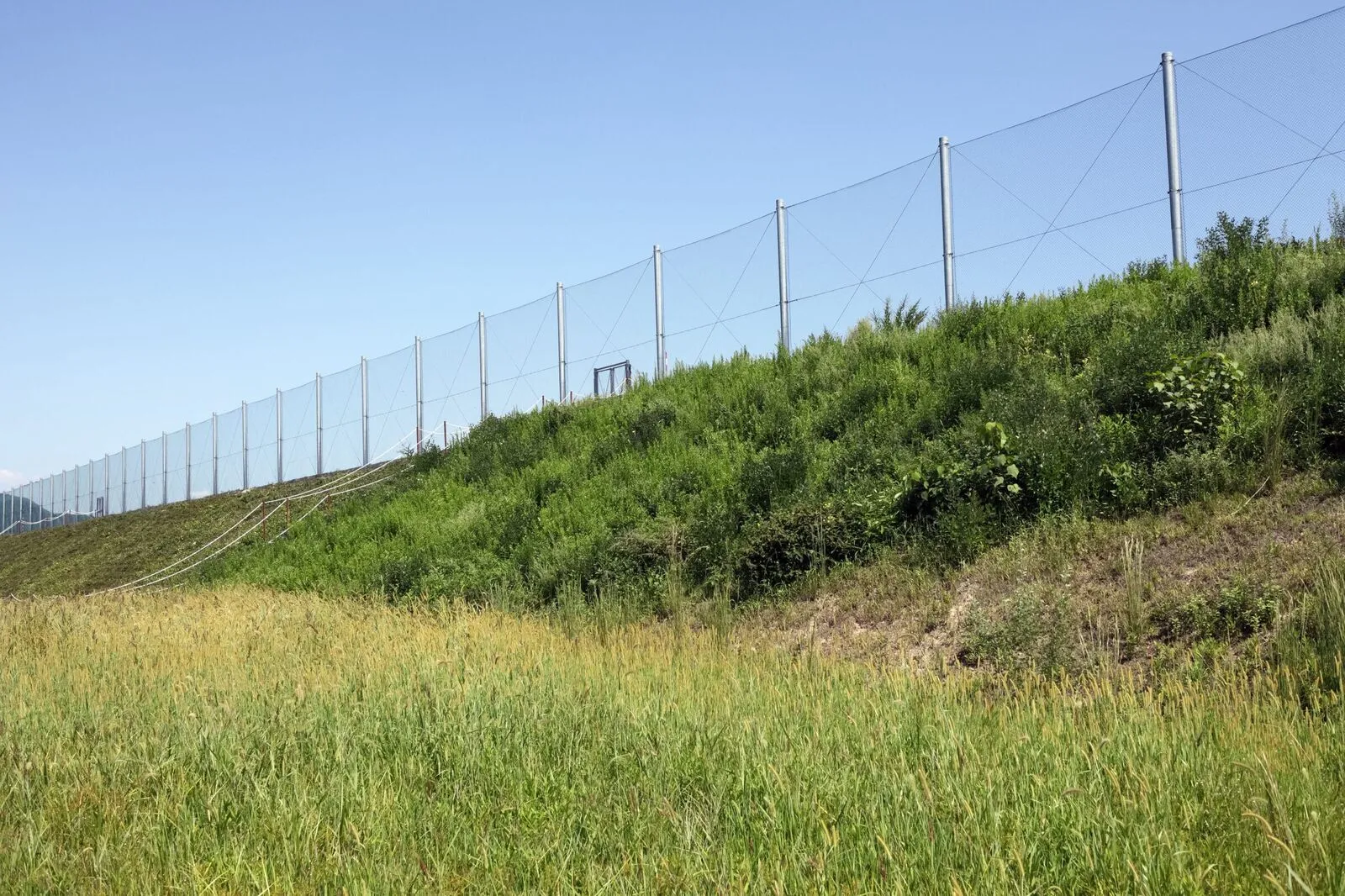
Rail corridors need fencing that keeps people and animals off the track, marks the boundary clearly, and holds up in an exposed, high-traffic setting. The fence is the straightforward part. The harder part is that the work happens next to, or inside, a live operating railway, which changes who is allowed on site and how the job is run.
The crew is trained and ticketed for rail
Every one of the crew is trained and ticketed to work on the railways. That is not a detail, it is the thing that lets the job go ahead at all. Rail corridor work means inductions, safe working around live lines, and coordination with the operator's access windows. A fencing contractor without rail tickets simply cannot stand where the fence needs to go.
Fencing options for rail infrastructure
- Chainwire fencing for defining boundaries and stopping unauthorised crossings, the workhorse of corridor fencing.
- Palisade fencing where a stronger vertical steel barrier suits depots and high-security points.
- Anti-climb mesh with small apertures where climbing and tampering are the real risk.
- Access gates for maintenance crews and emergency access at controlled points.
The standards it answers to
Rail fencing sits under Transport for NSW requirements for rail security infrastructure and, on the interstate and Hunter network, Australian Rail Track Corporation access and safety rules. Local council conditions on noise and boundaries can also apply near stations and level crossings. Getting the fence line, gate positions and clearances right the first time avoids re-work in a setting where re-work means booking another access window.
How the job is planned
A rail job starts with a site assessment that reads the terrain, the access points and the security risk, then works backwards from the operator's available possessions. The fence spec follows the corridor, not a catalogue.
Who builds it
Rail corridor fencing is built by the Newcastle crew behind Chainwire Fencing Specialist, who work across rail corridors, highways and industrial sites and have done since 2004. To scope a corridor job or an access-window schedule, contact the team.
If you are pricing a rail job, confirm the contractor's rail tickets before anything else. It is the one requirement that decides whether they can legally do the work.