
Security fencing has moved well beyond a tall fence and a padlock. As threats have got more sophisticated, so have the tools, and a modern perimeter often blends a physical barrier with a layer of technology. Here is a clear-eyed look at what is genuinely changing, and where a well-built fence still does the heavy lifting.
Smarter detection
Smart fencing systems pair the fence with sensors, infrared and motion detectors, high-resolution cameras and, increasingly, AI that can tell a person from an animal or a swaying branch. The result is real-time alerts and fewer false alarms, so security staff react to real events. Video analytics push this further, analysing camera feeds live to flag unusual patterns and behaviour. Thermal imaging keeps that detection working in darkness, glare and bad weather by reading heat rather than light, which is valuable on large or poorly lit perimeters. Environmental sensors can even add readings like air quality and noise, useful on industrial sites where a sudden change might signal a spill or a fire.
Harder to beat, physically
The barrier itself keeps improving. Anti-climb and anti-cut design now includes angled or rotating toppings and reinforced mesh that offer no grip and resist cutting. High-strength materials, from reinforced steel to composites, add durability and resistance to force while cutting long-term maintenance. Electric perimeter systems have got safer too, using pulse technology that deters without serious harm and can be monitored remotely. None of this replaces a solid fence; it makes a solid fence harder to get over, through or around.
Smarter access and control
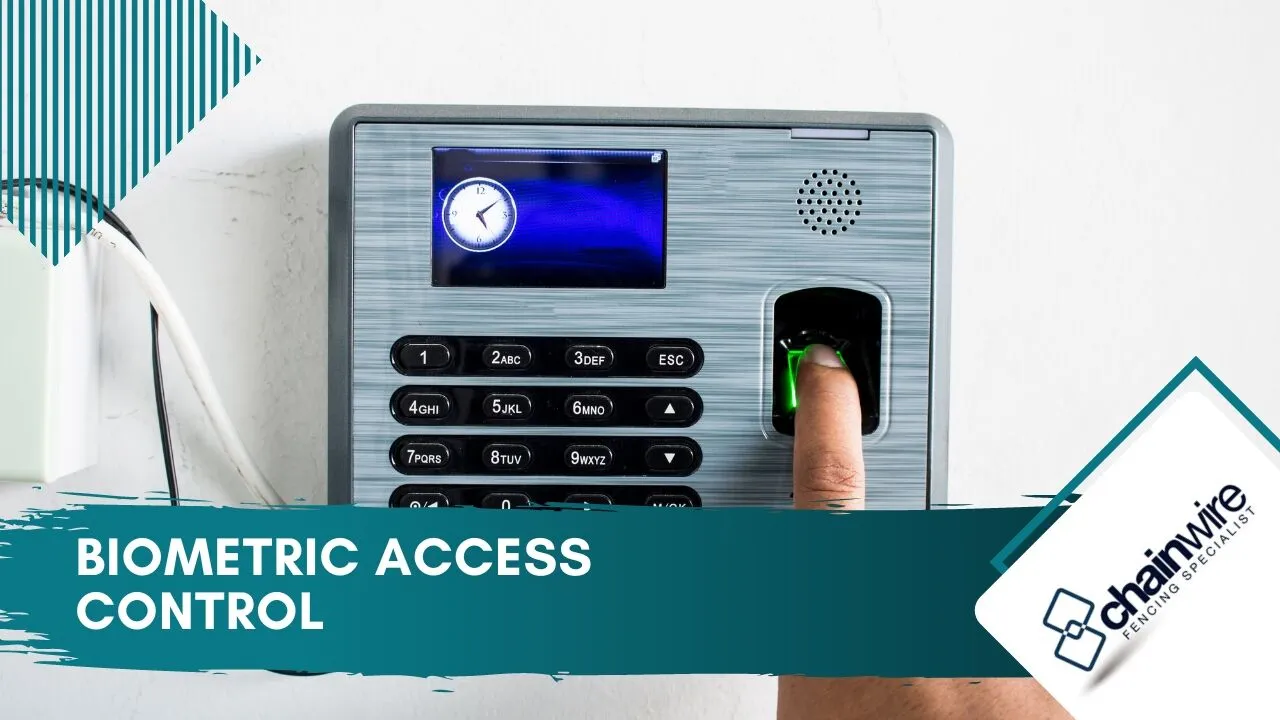
Biometric access, fingerprint or facial recognition, ties entry to the individual and logs who went where, which matters on high-security sites. Integration with building management systems lets a breach trigger alarms, notify authorities or start a lockdown automatically, coordinating the fence with the rest of the building's security. And modular, scalable designs let a perimeter be customised and extended as needs change, rather than rebuilt.
Flexible and self-sufficient
Solar-powered systems run security features off the sun, which keeps a perimeter working off-grid and cuts running costs. Rapid-deployment fencing gives events, construction sites and emergencies a strong barrier that goes up and comes down fast. Crowd-control features like adjustable height and anti-surge panels tune a temporary fence to public events. And reflective coatings make a fence more visible, adding both deterrence and safety in low light.
What has not changed
For all the technology, every one of these systems assumes a sound physical fence to attach to. Sensors, cameras and access controls are layers on top of a barrier; if the fence itself can be cut or climbed, the electronics are watching a hole. The foundation is still a well-specified steel or mesh perimeter and properly built gates, which is where the money is best spent first. The clever additions then multiply what that fence can do.
The takeaway: the exciting innovations in security fencing are mostly in detection, access and power, and they are real. But they earn their keep only on top of a barrier that actually stops someone, so get the fence and the gates right first, then layer the technology that suits your risk. For the barrier itself, start with steel security fencing FAQs.