
Steel is one of the main building blocks of a site's security because it is strong, versatile and quick to install. Here are the questions property and facility managers ask us most often about steel security fencing.
Steel or aluminium, which is better?
It depends on the job. Aluminium is light and naturally corrosion-resistant, which makes it a good decorative and residential choice, but it is not built for hard security. Steel is stronger and can span further between posts without sagging, which means fewer posts and a more imposing barrier. For a genuine security perimeter, steel is the answer; for a decorative residential boundary, aluminium often makes more sense.
What is the advantage of galvanising?
Galvanising bonds layers of zinc to the steel, and that zinc corrodes in place of the steel underneath. Without it, exposed steel rusts quickly and the fence has a short life. With it, the fence stays sound for years. Modern steel security fencing is typically galvanised and then powder-coated, which combines rust protection with a durable, coloured finish.
How long does a steel fence last?
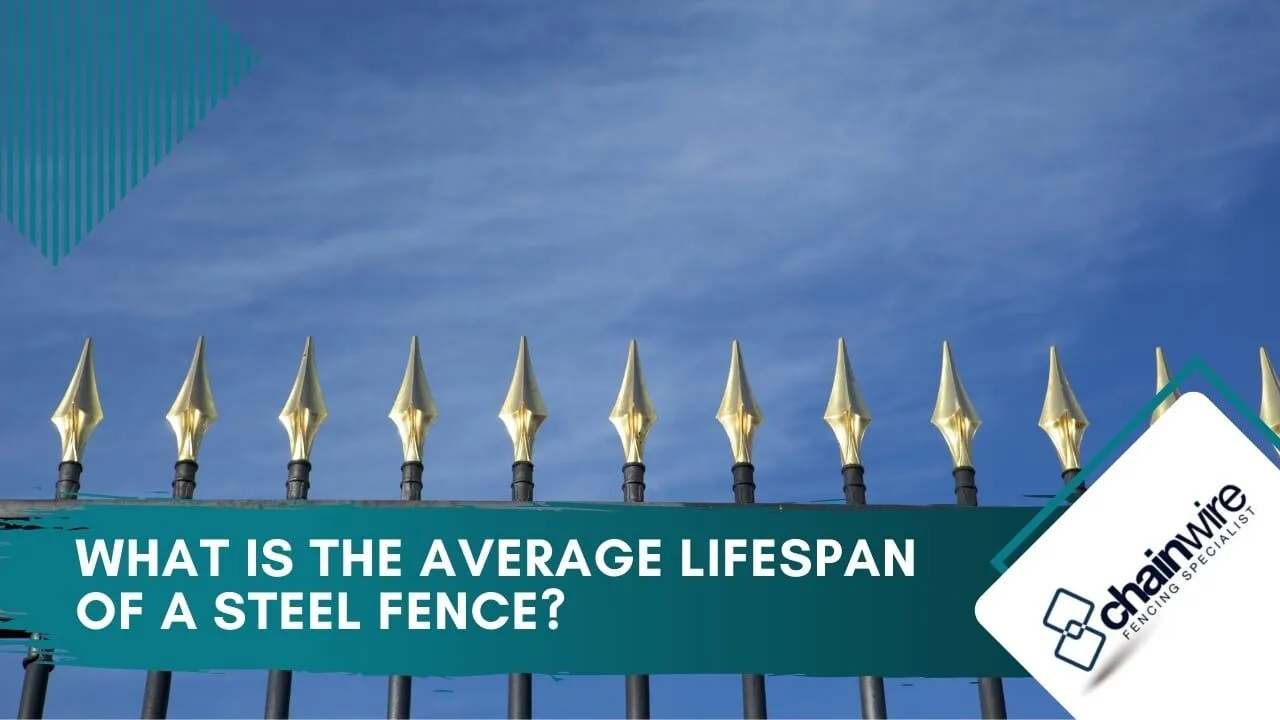
A well-made, galvanised and powder-coated steel fence is one of the longest-lived options going, comfortably lasting decades with basic maintenance. Life depends heavily on the environment: coastal and industrial sites are harder on any coating, so the spec has to match the setting.
What maintenance does it need?
Not much. Wash off any build-up of dirt, mould or residue with soap and water. The one job that matters is dealing with chips in the coating before they rust: sand or wire-brush the spot, apply a rust-inhibiting primer, and touch it up. Catch it early and the fence looks after itself.
What makes a fence genuinely secure?
Three things beyond just height. It should be an obvious visual deterrent, because a fence that looks serious makes an intruder think twice. It should resist climbing, through close pale spacing, C-channel rails and curved or pointed tops that give nothing to grip or stand on. And it should balance form and function, because a fence that is both strong and tidy signals a site that takes security seriously.
Which standards apply?
Security fencing in Australia is built to published standards. AS 1725.1 covers the general requirements for chain-link fabric security fences and gates, and AS 2423 covers coated steel wire fencing products. The exact standards depend on the type and purpose of your fence, so if you are specifying for a sensitive site, confirm the current version with your installer.
What about the boundary line?
Before anyone installs a fence, the property boundary has to be settled. Never build over a line you are not certain of; if there is any doubt, get a survey first. Putting even part of a fence on land you do not own is a problem you will have to unpick later. Where a fence is shared with a neighbour, the Dividing Fences Act 1991 (NSW) sets out how responsibility is shared.
Do I need to be on site during installation?
No, but stay reachable. A crew may have a question or hit a spot that needs a decision, and being contactable keeps the job moving.
The takeaway: a galvanised, powder-coated steel security fence with anti-climb detailing, built to the right standard and on a confirmed boundary, gives you decades of low-maintenance protection. The spec and the standard are where a security fence is won or lost, so get them right at the quoting stage. For the panel-based end of the range, see why use weldmesh.