
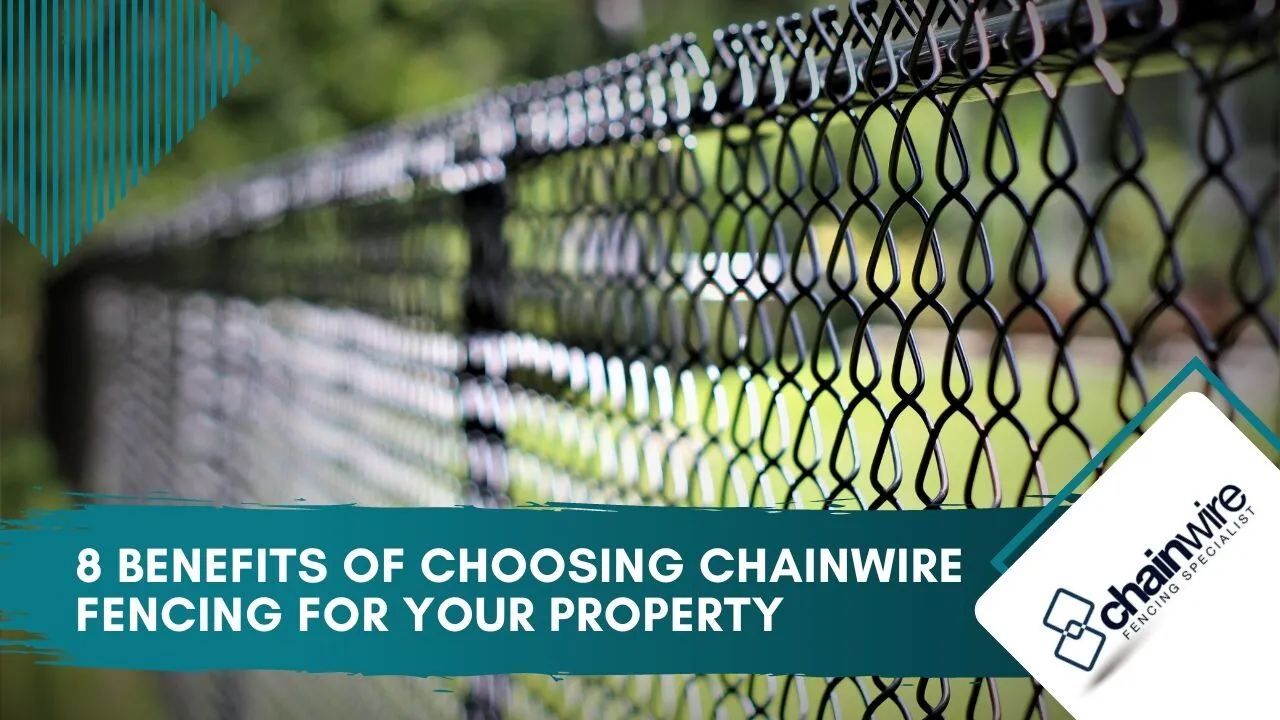
Different fences suit different jobs, but one type turns up again and again across homes, farms, schools, sporting grounds and commercial sites: chainwire. You will also hear it called chain link, cyclone fencing or chain mesh, they are all names for the same woven galvanised mesh. It stands out for a straightforward reason: low maintenance, real durability, sensible cost and genuine versatility, all in one fence. Here is what it does well, and what to think about before you choose it.
What a chainwire fence actually is
A chainwire fence is a woven fence made from galvanised steel or aluminium wire, formed into an open diamond mesh and fixed to steel posts. That open weave is the source of most of its advantages, it uses far less material than a solid barrier, so it costs less and you can still see through it.
A few things shape how a chainwire fence performs:
- Material. Aluminium wire is cheaper and easier to install; steel wire is stronger and stands up better to harsh weather.
- Gauge. Gauge measures the wire's thickness, a lower gauge number is a thicker, stronger wire. Commercial jobs use heavier gauges; temporary fencing uses lighter ones.
- Mesh (grid) size. The diamond size follows the purpose: industrial fencing uses a small, tight mesh, recreational spaces a medium mesh, and residential boundaries a larger, more open one. Our diamond size guide explains how this changes security and cost.
- Coating. A PVC or powder coating in green or black adds corrosion resistance and a tidier look, for a little more cost.
What chainwire is good for
It works as a barrier in an unusually wide range of settings, schools, wildlife zones, parks, sporting complexes, golf courses and commercial properties among them. Common jobs include containing farm animals, marking a boundary against a road, enclosing a garden against pets, and giving a home a clean, open, secure perimeter, real peace of mind for a family with small children, without walling the place in.
Eight reasons it earns its place
Quick and easy to install. Woven steel wire fixed to galvanised steel posts goes up fast, which keeps labour and disruption down.
Durable and well structured. The interlocking wires, protected by zinc and often a PVC or powder coating, are hard to break and stand up to high-traffic use and rough weather. Because the wires are galvanised, you rarely see the mould and mildew that affects some other materials.
Economical. Chainwire costs far less per metre, installed, than most alternatives, and it usually does not require council approval, which avoids delay and expense. For a large perimeter on a budget, little else compares.
Low maintenance. Corrosion-resistant coated wire does not demand much. Unlike timber, there is no treating for termites or rot; unlike some metal fencing prone to denting and rust near the coast, coated chainwire holds up. A well-installed fence largely looks after itself.
Genuine security. Quality steel mesh forms a sturdy barrier, and it scales, add barbed wire along the top, tighten the mesh, or fit electric wire, and the same fence steps up to a serious deterrent.
Visibility. The see-through mesh lets you watch your boundary and spot anyone attempting to trespass, a security advantage a solid fence cannot offer. Where privacy is the priority, slats or a screening infill can be added.
Colour options. It does not have to be plain. Beyond standard silver and black, a PVC coating in green, blue or dark grey lets the fence blend with foliage or match a property.
Wildlife-friendly. For zoos, wildlife parks and farms, chainwire separates domestic animals from the wild and keeps people from unknowingly harming local species, while its open mesh still lets the smallest creatures pass through.
Easy to repair, easy to move
Two underrated benefits. Repairing chainwire is usually as simple as replacing the damaged section rather than dismantling whole panels, which makes fixes cheap and quick. And because it fixes to posts that can be pulled and wire that rolls up, chainwire can serve as a temporary enclosure and then be relocated, or stay put for the long term as a permanent galvanised boundary. Few fences are so flexible.
Is it time to switch?
If your current fence no longer keeps your property, family, stock or assets secure, or if it is costing too much to maintain, chainwire is worth a serious look. It is strong, durable and suited to almost any security requirement, from a suburban backyard to an industrial yard, and it is cheaper to maintain than a timber fence that needs regular painting and is prone to rot. Work out what the fence has to do first, then let a specialist set the material, gauge, mesh and coating to match, and you will have a fence that quietly does its job for decades. To keep it that way, our fence care and maintenance guide has you covered.