
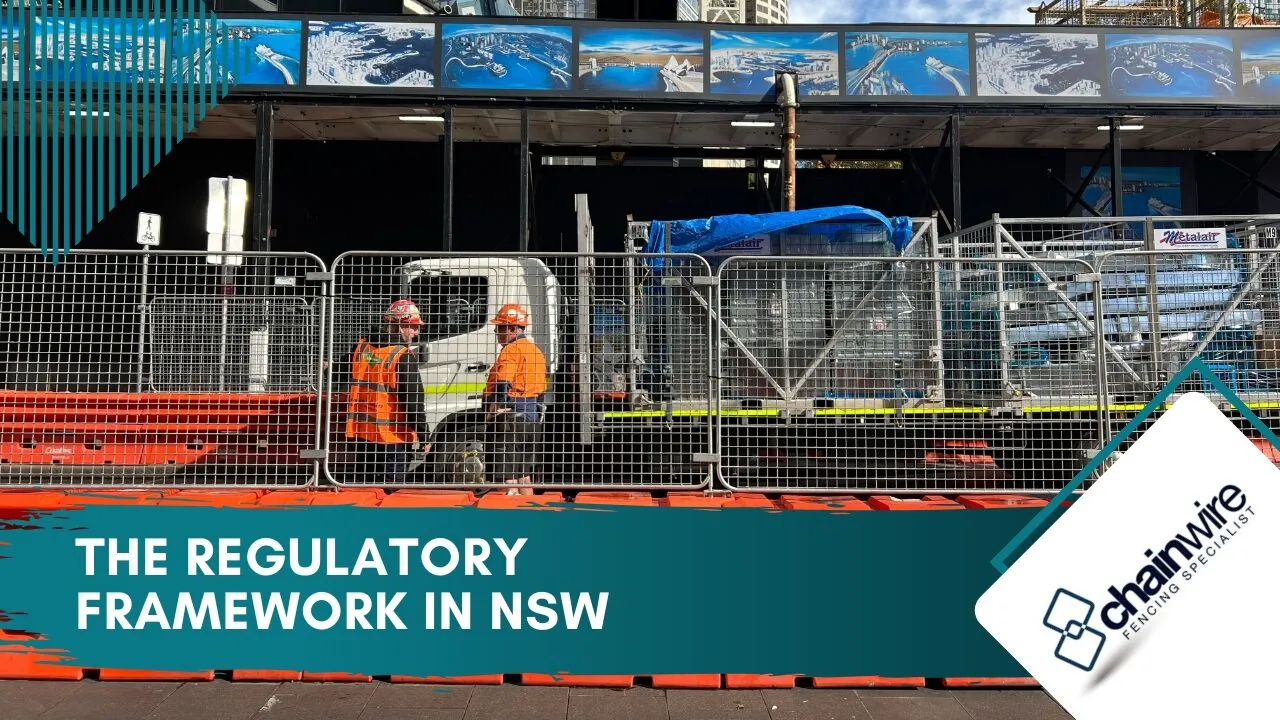
If you run a construction site in NSW and your temporary fencing does not meet the requirements, you are not just risking a fine. You are exposed to serious liability if someone is hurt. The rules around site fencing are specific, and they are enforced. Here is what actually applies, and what inspectors look for.
Why it matters more than people think
Temporary fencing is a legal requirement for most construction sites in NSW. Both SafeWork NSW and local councils have oversight, and the duties on the principal contractor are real. If an unauthorised person enters your site and is injured, the first question asked will be whether your perimeter fencing was compliant. "We had some fencing up" is a very different legal position to "we met the standard." Getting it right from the start costs a great deal less than dealing with the alternative.
The rules that apply
Temporary fencing requirements sit across a few instruments. The ones to know:
- Work Health and Safety Act 2011 (NSW) places the primary duty of care on persons conducting a business or undertaking. Principal contractors must ensure the site is secure against unauthorised access.
- Work Health and Safety Regulation 2017 (NSW), Chapter 6, covers construction work specifically, including the principal contractor's duty to keep the workplace secure.
- Development consent and council conditions. Many NSW development approvals set their own conditions for site hoarding and fencing. Check your DA, because it can require more than the WHS minimum.
- AS 4687-2007 Temporary fencing and hoardings, published by Standards Australia, is the Australian Standard that sets the technical specifications. Meeting it is what "compliant temporary fencing" means in practice.
If you are unsure which rules apply to a specific project, the SafeWork NSW site is a good starting point, and your principal contractor should have a site safety management plan that addresses it.
What AS 4687-2007 asks for
The standard covers the physical requirements for panels, feet and connections. The key points, in plain terms:
- Panel height. A minimum of 1.8 metres above ground where public access to the perimeter is possible.
- Panel construction. Typically galvanised steel mesh panels, structurally sound and free of sharp projections.
- Base feet. Concrete or rubber feet weighted enough to resist displacement and to stay stable in the wind conditions typical for the location.
- Connections. Clamps or ties at each join so gaps cannot open between panels.
- No child-sized gaps. No opening a child could pass through, a specific risk-management point under WHS law.
- Visibility. Where the fence runs along a public footpath, sight lines for pedestrians and road users matter for both safety and council approval.
Sites next to schools, hospitals, busy footpaths or public car parks draw closer attention. If yours is one, treat the requirements as a floor, not a ceiling.
Temporary fencing versus hoarding
The two terms get used interchangeably, but they are not the same.
Temporary fencing is the mesh panel system on concrete feet, chainwire or welded steel mesh, used where the job is to restrict access without fully screening the site.
Hoarding is a solid barrier, plywood or purpose-built panelling, that fully screens the site and provides a more substantial physical barrier. Hoarding is required where work happens directly beside a public thoroughfare, particularly with overhead work or a risk of falling objects reaching the footpath. Some urban NSW councils mandate hoarding in the DA rather than mesh fencing, and works over or beside a public footpath usually need a hoarding licence from the council. Check your approval documents.
The failures inspectors flag
These come up again and again:
- Fencing that has shifted or fallen. Feet get knocked by plant, panels lean. Fencing that is not upright is neither compliant nor safe. Daily checks matter.
- Gaps at gates. A double gate that does not close flush leaves a gap. Inspect the hardware and replace worn parts.
- Unsecured fencing on windy days. Along the coast and on exposed sites, an under-weighted panel becomes a projectile. Weight the feet and add bracing clamps in exposed spots.
- Missing signage. The fence is also the display surface for mandatory site signage, principal contractor details, a 24-hour emergency contact and the site address.
- No pedestrian management. Where the fence line crosses or runs near a footpath, you may need temporary barriers or a covered walkway to redirect people safely.
- Damaged panels. Bent, broken or heavily corroded panels do not meet the standard, even used only to fill a gap.
Compliance is ongoing
Under WHS law the duty does not end at setup. Inspect the perimeter at the start of each shift, and again after any significant wind or weather event. Document it, a short site-diary note of the date, time, who inspected and any issues is enough, and it demonstrates you are actively managing the obligation. When fencing is damaged or displaced, fix it the same day, not next week.
Getting set up right
Before the site starts: confirm whether your DA requires fencing, hoarding or both; check whether a council hoarding licence is needed; work out your linear metres of perimeter including gates; plan gate locations against vehicle and pedestrian movement; and arrange delivery so fencing is in place before any other activity begins.
Whether you hire or buy, and for most projects hiring is the practical choice, the fencing has to meet AS 4687-2007, and the compliance obligation sits with the principal contractor either way. A ten-minute conversation with a supplier who knows the NSW requirements at the start of a project is a lot cheaper than a rectification notice. A contractor's construction site temporary fencing supply is built to the standard for exactly this.