
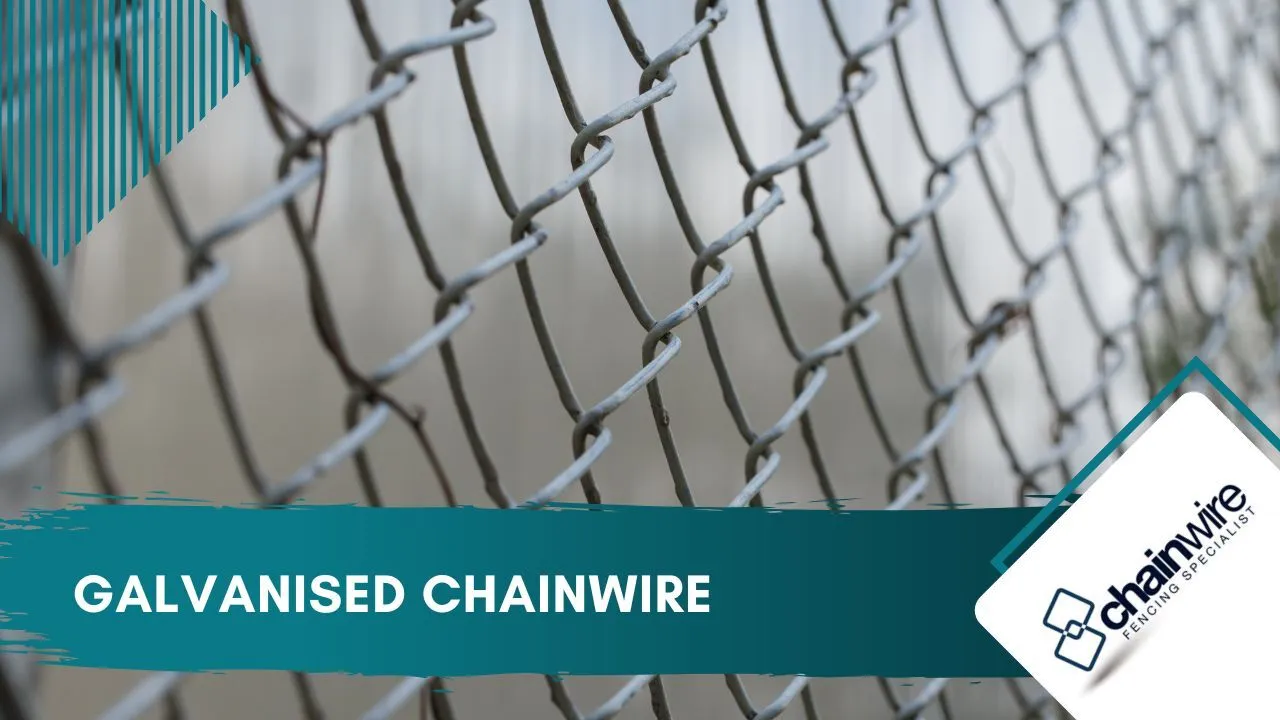
Chainwire fence, also called cyclone fencing or chain mesh, is a woven fence made from hot-dip galvanised steel wire. Galvanising coats the steel with zinc by dipping it in a molten bath at around 450 degrees Celsius, which is what protects it from rust and lets it last in tough environments. The wires are woven into a diamond pattern that gives both strength and flexibility, which is why it shows up on residential, commercial and industrial sites alike. Not all chainwire is the same, though. Here are the materials, the gauges and the uses.
Chainwire materials
Galvanised chainwire
Plain galvanised is the popular default, with a zinc coating that resists rust and corrosion across most conditions. Wire gauge should match the location: a 2.5mm wire is standard for residential fencing, while a thicker 3.15mm wire is the call for industrial or coastal sites where the weather is harsher.
PVC-coated chainwire
PVC-coated wire is galvanised and then coated in polyvinyl chloride for an extra layer against rust and wear, which makes it well suited to coastal and heavy-weather areas. It comes in black and green, and the black version is popular for its smooth, subtle finish that blends into landscaping.
Stainless steel chainwire
For maximum durability, stainless steel chainwire resists corrosion best of all, especially in high-salt coastal air. It costs more upfront and is usually reserved for industrial settings where long-term performance matters, but its longevity can offset the higher price over time.
Common uses of chainwire fencing
Chainwire is one of the most versatile fences going. The most common applications:
- Security fencing with a barbed or razor top. Adding barbed or razor wire along the top makes a chainwire fence much harder to climb, which is standard on warehouses, restricted areas and high-security sites. See our guide to barbed wire fencing.
- School security fencing. A spear-top chainwire fence is hard to scale, which is why schools use it around grounds, playgrounds and sports fields to cut trespassing and vandalism. More on this in our school security fencing guide.
- Residential fencing. A cost-effective way to define a boundary and contain pets. PVC-coated black is often preferred at home for its tidier look, and it takes gates and privacy slats easily.
- Internal partitions. Bolted to the floor and often braced to the ceiling, chainwire separates storage and restricted areas inside warehouses and factories, with lockable gates for controlled access.
- Secure storage cages. Chainwire cages protect tools and equipment while keeping the contents visible, and can be roofed in galvanised wire for full enclosure. Our storage cage guide covers this.
- Temporary construction fencing. Quick to install and remove, it secures a building site and keeps the public clear of hazards, from a home reno to a large commercial build.
- Rural and livestock fencing. Height and gauge adjust to contain stock, protect crops and mark boundaries, with the weather resistance rural blocks need. See our rural fencing guide.
- Animal enclosures. Flexible enough to build enclosures of any size for zoos, farms and wildlife parks. Black PVC-coated is popular for visibility, and the wire can be buried to stop animals digging out.
- Sports facility fencing. Strong boundaries for tennis courts, ovals and cricket nets that hold up to heavy use without blocking the spectators' view.
Selecting the right chainwire fence
The right choice comes down to the environment and the job. Galvanised suits most residential and commercial settings, balancing cost and durability. PVC-coated adds protection and a cleaner look where the weather is harsh or appearance matters. Stainless steel is the long-term answer where there is high moisture or salt. Match the wire thickness, coating and fence height to the location and use, and the fence will do its job for decades.