
On a farm the fence has a job to do: keep stock in, keep pests out, protect crops and split paddocks. Choosing one comes down to what animals you are containing, how much land you are enclosing and how much maintenance you want to sign up for. Here are the rural fence types worth knowing, and where each earns its keep. Our own rural work is wire and steel systems, and that is the honest bulk of what goes up on Australian farms, so that is where this guide spends most of its time.
Timber post-and-rail
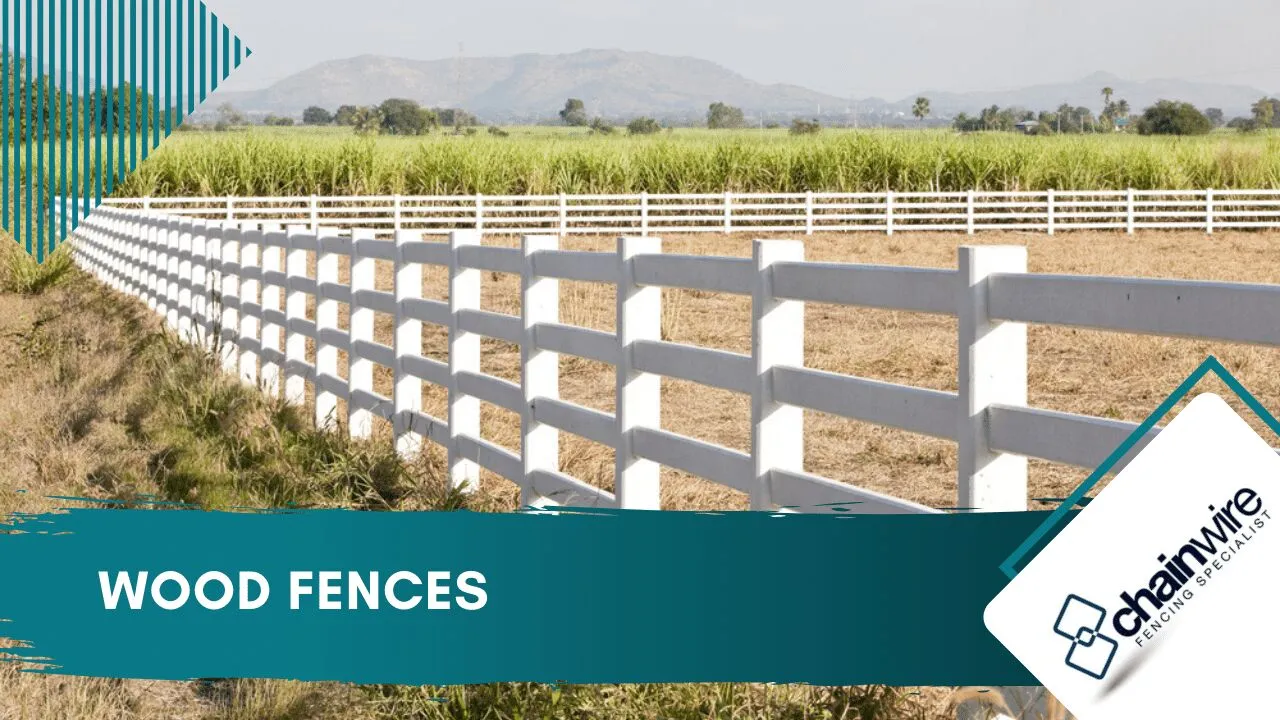
Timber is the traditional look, usually milled on the farm, and a well-maintained wooden fence can last around 20 years with staining or painting every few years. It suits smaller fields, stockyards and paddocks separating stallions or bulls. It is labour-intensive and needs upkeep, and timber post-and-rail is a specialist timber trade in its own right, so if that is the look you want, a timber fencer is who to call.
Metal T-post fence
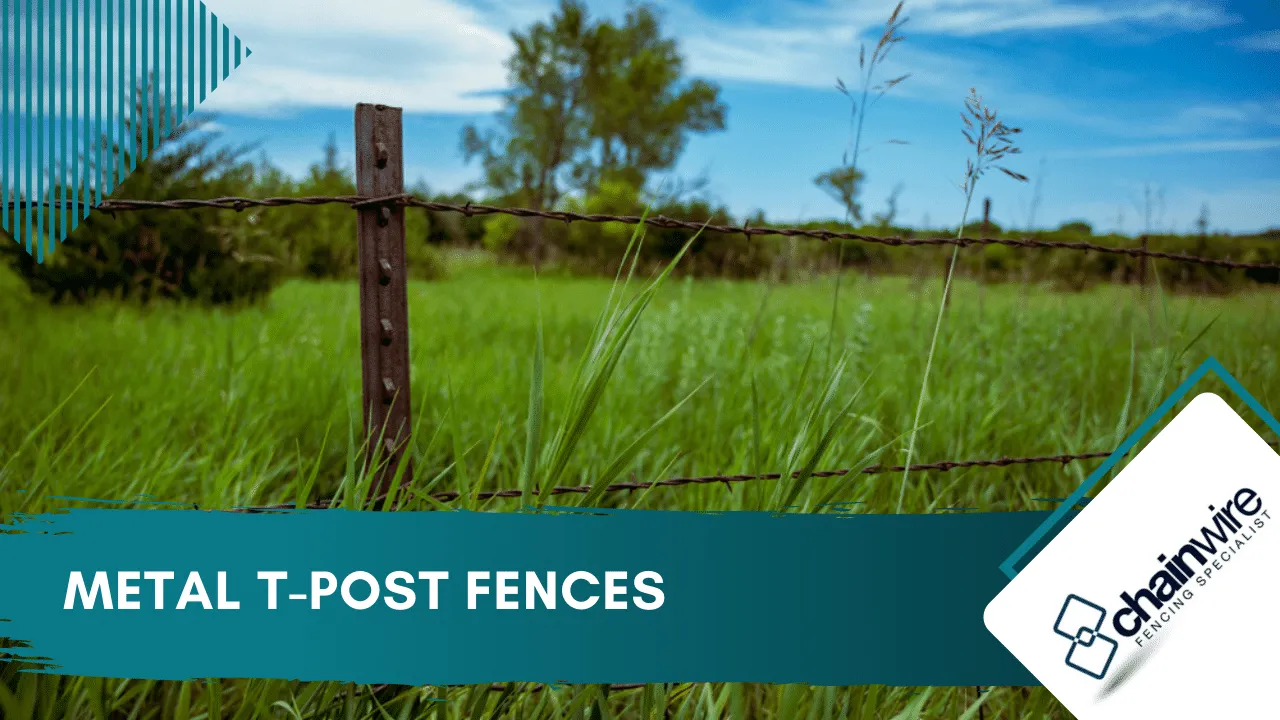
T-posts (star pickets) come in sizes from around 4 to 8 feet, are cheap, reusable and movable, and go in fast with a post driver. They are less handsome than timber but far more practical for long runs, and they carry wire and mesh well with the right clips. On most Australian farms they are the backbone the wire hangs off.
Welded wire fence
Welded wire is made by welding the joints between vertical and horizontal wires, usually in a 2 by 4 inch mesh. It is not as strong as woven wire, so it suits animals that will not lean or stand on it: garden fencing, a chicken run, protecting young trees and plants. Good for containment, not for impact.
Woven wire fence
Woven wire ties each joint with a knot rather than a weld, which makes it far more durable and forgiving. It comes in many heights and mesh sizes, and it is the go-to for goats and other stock that push and climb: small openings stop heads getting through, and the knots take the impact when an animal leans on it. It costs more than welded wire and is worth it, and it is easier to stretch and repair.
Barbed wire fence
Barbed wire, run as two or three strands of strong wire with barbs set in, is the classic cattle fence. It works by aversion: stock learn to keep away. It contains docile animals across big spaces cheaply, though a large aggressive animal can breach it. Keep in mind barbed wire is restricted or banned on residential boundaries, so it belongs on rural and industrial land.
Synthetic fence
Modern synthetic fencing has come a long way from the shabby 1970s product and now carries long warranties against rust, splitting, peeling and fading. The two common forms are PVC (hollow rails that fit into heavy posts, popular for horses, alpacas, emus and llamas) and high-tensile polymer rail (flexible rails that slide through post brackets and flex under impact). It installs at higher cost and needs specialised tools, but it is low-maintenance once up.
Electric fence
Electric fencing runs insulated live wires on insulated stakes, and stock that brush it learn to stay clear. It is effective and cheap to extend, can be run inside an ornamental fence, and a fully electrified mesh is handy for poultry, keeping birds in and predators out. It is generally safe, but take extra care where small children are on the property, and follow the electric-fence rules for your area.
Field fence
Field fence is heavier-gauge wire fence, often 12-gauge with 10-gauge top and bottom wires and crimped joints for strength, built for hogs, cattle and other big livestock. It comes in a few knot styles:
- Hinge-joint knot wraps the vertical wires around the horizontals for lateral strength, though animals can climb it and slide the wires, so watch that.
- Fixed-knot reinforces the joint from both directions and stops the wires sliding.
- Woven field fence interweaves and knots the wires with crimped joints, so it springs back to shape after a big animal rams it. Best for goats, bulls and steers that push a fence hard.
Choosing the right rural fence
Start with the stock and the pressure they put on a fence, then the size of the run and your maintenance appetite. Small climbing animals want tight woven wire; big pushers want fixed-knot or woven field fence; long cattle runs suit barbed or plain wire on star pickets; horses suit synthetic or plain wire, never barbed. Review the options against your own paddocks before you buy, because a fence is time and money you only want to spend once.