
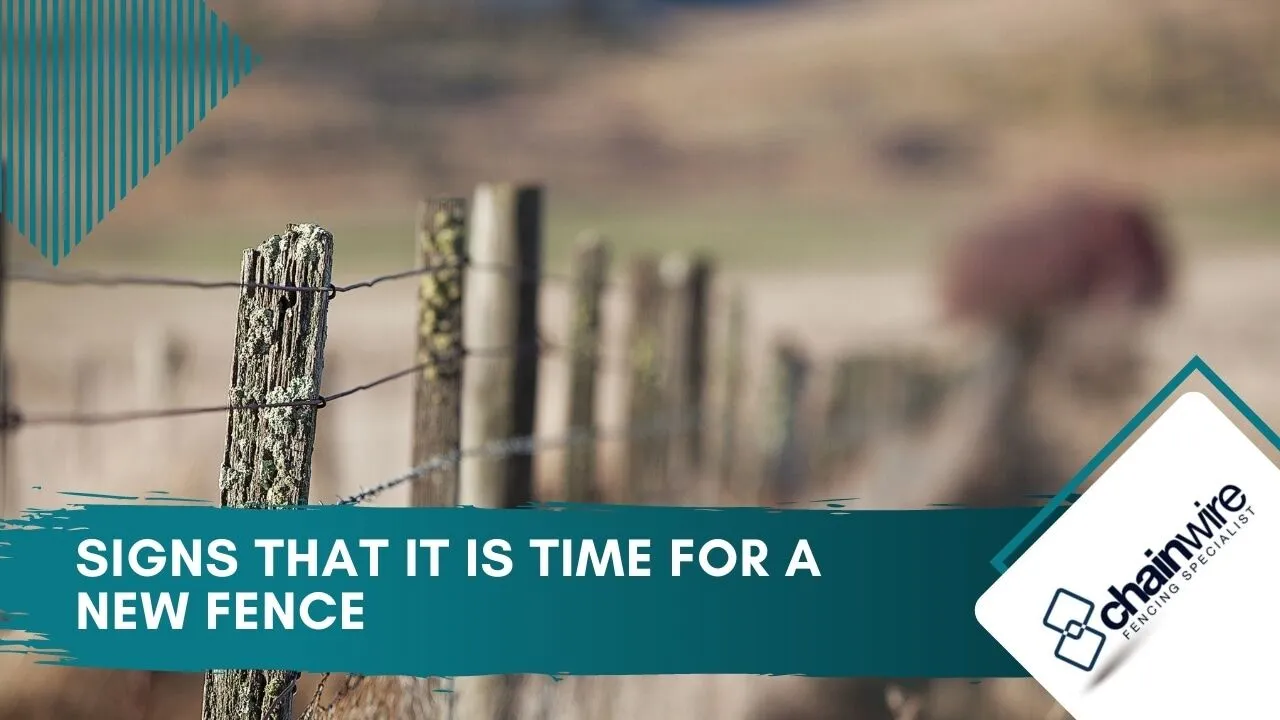
A rural fence does a lot: it manages stock, marks boundaries, provides security and adds to the value of the land. Because it works so hard, wear and tear are inevitable, and there comes a point where patching it up is no longer the smart move. Here is how to read the signs, and the situations where an upgrade pays for itself even when the old fence still stands.
The structural signs
The fence will age whatever it is made of. Watch for these:
Leaning or tilting. If posts or sections are starting to lean, the structure is failing. You can sometimes buy time by replacing the worst runs and adding new support posts, but once the lean is widespread, replacement is usually more practical, and a leaning fence no longer keeps stock or wildlife where they belong.
Gaps and missing sections. A fence you can see straight through, or walk stock straight through, has stopped doing its job. Swapping the odd broken panel works in the short term; if it is happening all along the line, a full upgrade saves you the constant chase.
Stuck or uneven gates. Gates that jam or sit crooked usually point to loose connections, and loose connections mean the fence is weakening into a hazard.
Decay and discolouration. On older timber elements, checking and rot spread from panel to panel once they start, and fading colour is an early sign a fence is on the way down. Where a timber fence has reached this point, most rural owners replace it with galvanised steel and wire systems that will not rot, warp or feed termites.
The reasons beyond damage
Sometimes an upgrade makes sense even when the fence is structurally sound, because your circumstances have changed.
You have changed what you keep. The right fence for cattle is the wrong fence for sheep, and different again for horses, poultry or smaller stock. If you have changed the animals on the property, the fence needs to match their size, strength and ability to climb or jump. Taller stock need height; smaller animals need a tighter woven mesh pinned close to the ground so nothing escapes underneath. A specialist can advise on the right system for the animals you now run.
Bushfire risk. In fire-prone country, an all-steel fence is strongly preferred. Heavy-duty galvanised steel fencing and strainer assemblies are built to withstand high temperatures and will not combust when a fire front passes, which spares you rebuilding fences during the clean-up, and buyers increasingly look for fire-safe steel boundaries.
You are preparing to sell. Fences are one of the first things a buyer notices. Sagging gates, rusty hardware and wire-tied latches all suggest a property that has not been kept up, fairly or not, and a buyer factors the cost of re-fencing into what they will pay. A sound, tidy boundary removes that objection.
Is the upgrade worth it?
The cost of a rural fencing upgrade depends on the length, the type of fence and the lie of the land, slopes and difficult ground add to it. But the return, in secured stock, real security and property value, generally makes it money well spent. The thing that makes an upgrade last is quality: durable, reliable materials and hardware installed properly, so the new fence stands up to the animals and the weather for the long haul.
If your fence is showing several of these signs, or your circumstances have shifted, it is worth having a specialist assess it. A contractor's rural fencing work will show you the steel and wire systems built for the job. Repair what genuinely can be repaired, and upgrade where the fence has reached the end of the road, that judgement is where the value is.