
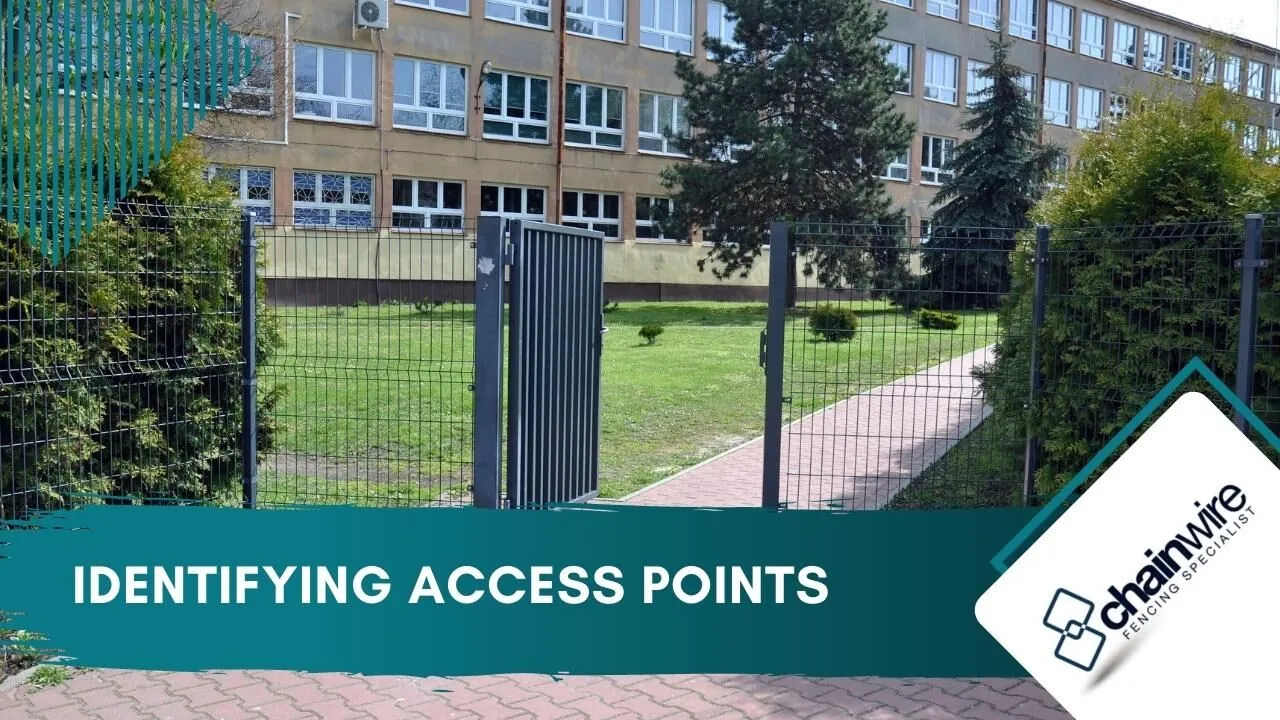
A school fence has a harder brief than most. It has to keep students in and safe, keep intruders and vandals out, protect valuable equipment, and still feel welcoming rather than like a compound. There is no single best answer, so instead of leading with a product, here is a framework for reaching the right decision for your school.
Start with the purpose
Before anything else, run a current risk assessment. What are you actually protecting against: after-hours vandalism and theft, unauthorised entry during the day, students leaving without permission, or all three? The surrounding area matters too, and an assessment from a few years ago may no longer reflect it. A clear purpose makes every later choice easier. A see-through fence like chainwire, for instance, gives staff wide visibility of who is coming and going, which helps with both intruders and unauthorised departures.
Weigh the look
Security is the point, but a school should not feel intimidating to the children and families who use it every day. The fence is part of the first impression a visitor forms, and it signals how seriously the school takes their welfare. Aim for a look that reads as protective and cared-for rather than hostile: something that clearly does its job without turning the grounds into a cage.
Set the budget with the long view
Budget is a real constraint, so bring it early. A standard design costs less than a fully custom one, and factors like height, the length of the run and the site's location all move the number. The key is to judge on lifetime value, not just install price: a durable galvanised steel or mesh fence may cost more up front but outlast and outperform a cheaper option, which makes it the more economical choice over the years it stands.
Plan the access points
Where people and vehicles enter is as important as the fence itself. Access points should be deliberately placed and controlled so pedestrian and vehicle traffic can be managed and monitored, not left to happen anywhere along the boundary. This is worth working through with an experienced installer, who can advise on where gates and controlled entries best sit for both safety and everyday convenience.
Check maintenance and support
Even a high-quality fence takes knocks on a busy school site, so know who you will call for repairs before you need them. Choosing an installer who offers after-installation care and can respond to damage quickly is worth as much as the fence spec, because a breached or broken fence protects nobody until it is fixed.
Confirm the standards
Fencing requirements vary between states and territories, but the constant is that the make and materials must comply with the safety standards set by the relevant education department, along with the usual site checks like surveying and locating underground services. Build compliance into the plan from the start rather than discovering a problem at inspection.
Then choose the installer
Specifying a school's security fence is not a job for someone without the experience, because the safety of everyone inside rests on getting the type, durability and layout right. Look for an installer who takes the time to understand how the school actually operates, recommends genuinely useful additions rather than upsells, and works to the relevant government policies.
The takeaway: the best school fence is the one that falls out of this process, not the one you pick first. Settle the purpose, the look, the budget, the access points, the maintenance plan and the standards, and the right system, usually a durable, high-visibility steel or mesh fence with well-placed controlled gates, becomes clear.